
Boxing Arcade Machines for Mall Entertainment Areas: A Buyer Planning Guide
- Why Boxing Arcade Machines Belong in Your Mall Entertainment Mix
- The Psychology of Physical Play in Retail Environments
- Revenue Profile: How Boxing Machines Compare to Other Arcade Units
- Target Demographics and Placement Strategy
- Space, Safety, and Compliance Planning Before You Buy
- Floor Space and Clearance Requirements
- Electrical and Technical Infrastructure
- Safety Standards and Certification Compliance
- Key Features to Evaluate When Comparing Boxing Arcade Machines
- Sensor Technology and Score Accuracy
- Display, Lighting, and Audio Immersion
- Durability, Maintenance, and Total Cost of Ownership
- Operational Best Practices to Maximize ROI After Installation
- Pricing Strategy and Play Mode Configuration
- Leaderboard Culture and Competitive Programming
- Branding and Customization as a Revenue Multiplier
- Frequently Asked Questions About Boxing Arcade Machines for Mall Entertainment
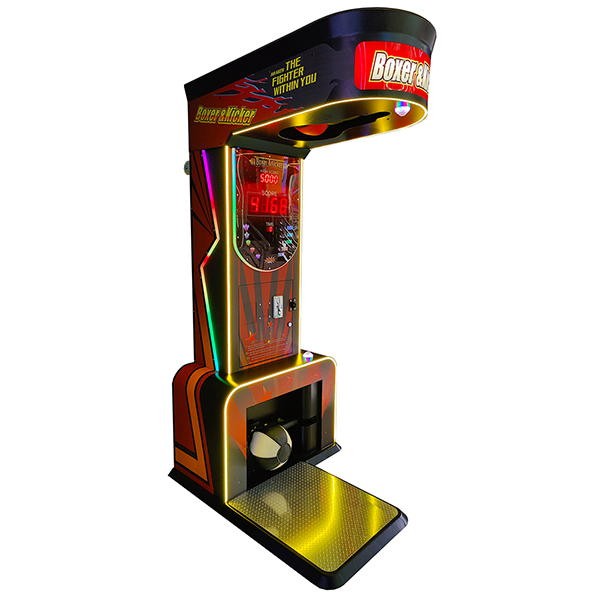
Boxing arcade machines are among the highest-engagement, highest-revenue attractions available to mall entertainment operators today. This guide covers everything a serious buyer needs to know: how to assess floor space and traffic flow, what safety and compliance standards apply, how to compare machine types by ROI, and what features drive repeat play. Whether you are opening a new FEC (family entertainment center) or upgrading an existing arcade zone, the decisions you make at the planning stage directly determine your long-term profitability.
Why Boxing Arcade Machines Belong in Your Mall Entertainment Mix
The Psychology of Physical Play in Retail Environments
Modern mall operators face a well-documented challenge: foot traffic has shifted, and passive retail browsing no longer holds visitors for extended periods. According to the International Association of Amusement Parks and Attractions (IAAPA), experiential entertainment attractions increase average dwell time by 30–45 minutes per visit — a figure that directly correlates with food court and retail spending. Physical arcade games, particularly those involving full-body movement, tap into what behavioral researchers call embodied cognition — the brain's tendency to assign higher emotional value to experiences that involve the body. A American Psychological Association review of physical activity and mood confirms that even brief bouts of vigorous movement trigger dopamine and endorphin release, making players feel rewarded and inclined to repeat the activity. For mall operators, this translates directly into longer stays, higher per-visit spending, and stronger word-of-mouth.
Revenue Profile: How Boxing Machines Compare to Other Arcade Units
Not all arcade machines generate equal revenue per square foot. The table below compares common arcade attraction types across the metrics that matter most to venue operators.
| Machine Type | Avg. Floor Space (sq ft) | Avg. Play Duration (min) | Typical Revenue/Day (busy location) | Repeat Play Appeal |
|---|---|---|---|---|
| Boxing Arcade Machine | 25–40 | 1–3 | $80–$200+ | Very High (score competition) |
| Claw Machine | 10–15 | 1–2 | $40–$120 | Medium |
| Racing Simulator | 30–50 | 3–5 | $60–$150 | Medium-High |
| Ticket Redemption Game | 15–25 | 2–4 | $50–$130 | Medium |
| Dance/Rhythm Machine | 35–55 | 3–6 | $70–$160 | High |
Boxing arcade machines consistently rank among the top performers in revenue per square foot, largely because play sessions are short, the competitive scoring mechanic drives immediate repeat plays, and the visual spectacle of the machine attracts bystanders who then become paying players.
Target Demographics and Placement Strategy
The primary demographic for boxing arcade machine units in mall settings spans ages 10–35, with the strongest engagement from teenage males and young adult groups. However, modern machines with adjustable difficulty and kick-and-punch combined gameplay are increasingly attracting female players and family groups. Placement strategy matters enormously: position units near high-traffic corridors, food courts, or anchor store entrances where natural foot traffic creates a built-in audience. Avoid tucking boxing machines into corners — the visual and audio spectacle is a primary acquisition tool. A machine that is seen and heard is a machine that earns.
Space, Safety, and Compliance Planning Before You Buy
Floor Space and Clearance Requirements
Before purchasing any boxing arcade machine, conduct a precise floor audit. A standard upright boxing machine requires a footprint of roughly 25–40 square feet for the unit itself, but safety clearance zones demand significantly more. Industry best practice, aligned with guidelines from the ASTM International Committee on Amusement Rides and Devices (F24), recommends a minimum 3-foot clearance on all active sides of the machine — the sides where players stand and swing. For combo punch-and-kick units, extend that clearance to 4–5 feet on the front and sides to prevent accidental contact with bystanders. Additionally, verify that your venue's flooring can handle repeated high-impact loading. Concrete subfloors with commercial-grade vinyl or rubber matting are ideal. Wooden subfloors may require reinforcement panels beneath the machine's base mounting points.
Electrical and Technical Infrastructure
Most commercial boxing arcade machines operate on standard 110V–240V single-phase power, drawing between 300W and 800W depending on lighting and audio systems. Confirm that your designated installation zone has a dedicated circuit — sharing a circuit with other high-draw equipment risks tripping breakers during peak hours, which disrupts gameplay and damages the player experience. For venues planning multiple units, consult a licensed electrician to assess load capacity before finalizing your layout. Cable management is equally important: exposed power or data cables in a high-traffic play zone create both safety hazards and liability exposure. Recessed floor conduits or wall-mounted cable trays are the preferred solutions.
Safety Standards and Certification Compliance
Commercial arcade equipment sold in the United States and European Union must meet specific safety certifications. In the U.S., look for UL (Underwriters Laboratories) certification on electrical components. In the EU, CE marking is mandatory under the Low Voltage Directive and the Machinery Directive. The punching bag and sensor assembly on a boxing machine must be constructed from materials that absorb impact without fracturing — typically high-density polyurethane foam encased in reinforced PVC or leather-grain synthetic covers. Request material safety data sheets (MSDS) and impact absorption test reports from any manufacturer before committing to a purchase. Machines lacking documented safety testing represent both a liability risk and a potential regulatory violation.
Key Features to Evaluate When Comparing Boxing Arcade Machines
Sensor Technology and Score Accuracy
The scoring system is the heart of any boxing arcade machine's replay value. Older machines used simple pressure-plate sensors that measured raw force in a binary on/off manner. Modern units employ multi-axis piezoelectric or strain-gauge sensor arrays that measure both impact force (in Newtons or PSI equivalents) and strike velocity, producing a composite score that rewards technique as well as raw power. This nuance is critical for player retention: a scoring system that feels fair and responsive encourages players to improve and return. When evaluating machines, request a live demonstration and test the sensor response across a range of impact intensities. Inconsistent or laggy sensor feedback is a dealbreaker in a competitive entertainment environment.
Display, Lighting, and Audio Immersion
Visual and audio design directly influence how long a bystander takes to become a paying player. High-brightness LED scoreboards (minimum 1000 nits for visibility in mall ambient lighting), dynamic RGB lighting arrays that respond to gameplay events, and directional audio systems that project sound into the play zone without bleeding excessively into neighboring attractions — these are the features that separate High Quality machines from budget units. According to research published by the IEEE Consumer Electronics Society, multisensory stimulation (combining visual, auditory, and haptic feedback) increases user engagement duration by an average of 22% compared to single-channel feedback systems. In practical terms, a machine with reactive lighting and immersive sound will generate measurably more plays per day than a visually static equivalent.
Durability, Maintenance, and Total Cost of Ownership
Purchase price is only one component of the true cost of deploying a boxing arcade machine. Maintenance frequency, parts availability, and downtime risk must all factor into your buying decision. Key durability indicators include the punching bag's rated impact cycles (look for units rated at 500,000+ strikes before bag replacement), the quality of the coin/card acceptor mechanism, and the manufacturer's warranty terms. A machine with a 12-month parts-and-labor warranty and a local service network is worth a High Quality over a cheaper unit with no post-sale support. Request a full bill of materials for wear parts — bags, sensors, display panels — and verify that these components are available domestically with lead times under two weeks.
Operational Best Practices to Maximize ROI After Installation
Pricing Strategy and Play Mode Configuration
Setting the right price per play is a balance between accessibility and revenue maximization. In U.S. mall environments, $1.00–$2.00 per play is the standard range for boxing arcade machines, with $1.50 being the most common price point as of recent IAAPA operator surveys. Multi-play bundles (e.g., 3 plays for $4.00) increase per-session revenue and reduce the friction of repeated coin or card insertions, which is a documented barrier to repeat play. Configure your machine's difficulty curve to allow new players an achievable first score — this is critical for first-time player conversion. If the machine is too punishing on the first attempt, players walk away rather than inserting more credits.
Leaderboard Culture and Competitive Programming
One of the most underutilized revenue tools in mall arcade operations is the organized competition. Monthly high-score tournaments, posted leaderboards, and small prize incentives (gift cards, free play credits) create a recurring reason for players to return specifically to beat their previous score or challenge a rival. This approach, documented extensively in gamification research literature, converts one-time visitors into regulars. For venue operators, regulars are exponentially more valuable than first-time visitors: they spend more per visit, refer friends, and provide a stable revenue baseline that smooths out seasonal traffic fluctuations.
Branding and Customization as a Revenue Multiplier
Many operators overlook the brand equity value embedded in customizable arcade equipment. A boxing machine that carries your venue's logo, color scheme, and visual identity does more than look professional — it functions as a permanent, in-venue advertisement that reinforces brand recall every time a player interacts with it. Custom wrap graphics and logo integration on high-visibility machines have been shown to improve venue brand recognition scores in post-visit surveys. If you operate multiple locations, consistent machine branding across all sites builds a cohesive brand experience that supports marketing campaigns and loyalty programs.
Frequently Asked Questions About Boxing Arcade Machines for Mall Entertainment
What is the average ROI timeline for a boxing arcade machine in a mall setting?
Most operators recover their investment within 6–18 months depending on foot traffic and pricing. A well-placed unit generating $100–$150 per day at a $1.50 price point can recoup a $15,000–$20,000 machine cost within 12 months at a busy mall location.
How much floor space does a boxing arcade machine require?
A boxing arcade machine typically needs 25–40 square feet for the unit itself, plus a 3–5 foot safety clearance zone on active sides. Plan for a total dedicated area of 60–80 square feet to meet safety standards and ensure comfortable player movement.
What safety certifications should I require from a boxing arcade machine supplier?
Require UL certification for U.S. electrical compliance and CE marking for EU markets. Suppliers should also provide impact absorption test reports for the punching bag assembly and material safety data sheets confirming the bag materials meet commercial-use durability standards.
Can boxing arcade machines be customized with a venue's own branding?
Yes, most commercial-grade boxing arcade machines support custom logo panels, vinyl wrap graphics, and branded sticker kits. Customization reinforces venue identity and improves brand recall. The Neofuns Punch & Kick 3, for example, offers customizable logos and stickers specifically designed for venue branding.
How often does the punching bag on a boxing arcade machine need to be replaced?
Quality commercial units are rated for 500,000 or more impact cycles before bag replacement is needed. Under normal mall operating conditions — roughly 200–400 plays per day — this translates to approximately 3–5 years of service life before the bag requires replacement.
Why do boxing arcade machines generate higher repeat play than other arcade units?
The digital scoreboard creates an immediate competitive loop — players want to beat their own score or outperform friends. This score-driven motivation, combined with the physical satisfaction of striking, produces significantly higher repeat-play rates than passive or luck-based arcade games.
The 10 Key Factors in indoor boxing machine That Affect Cost
Safety and Compliance Standards for Boxing Game Machines
How to Choose the Best Punching Machine Manufacturer in 2026
Wholesale boxing game arcade manufacturer and supplier

Neofuns Punch & Kick Boxing Game Machine
High-grade one-piece structure, stable and durable structure. High-definition game screens, combined with special effects and sound effects, achieve multi-dimensional enjoyment of vision, hearing, and touch, and indulge in the fun of punching and kicking.
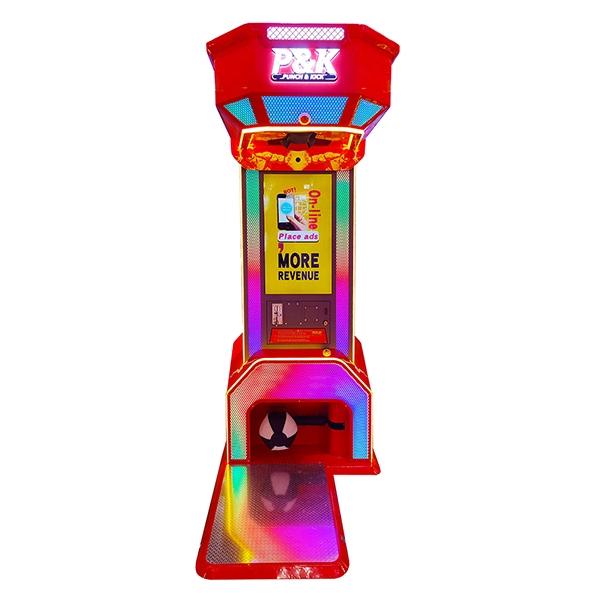
Neofuns Punch & Kick 2 Boxing Game Machine
High-grade one-piece structure, stable and durable structure. High-definition game screens, combined with special effects and sound effects, achieve multi-dimensional enjoyment of vision, hearing, and touch, and indulge in the fun of punching and kicking.
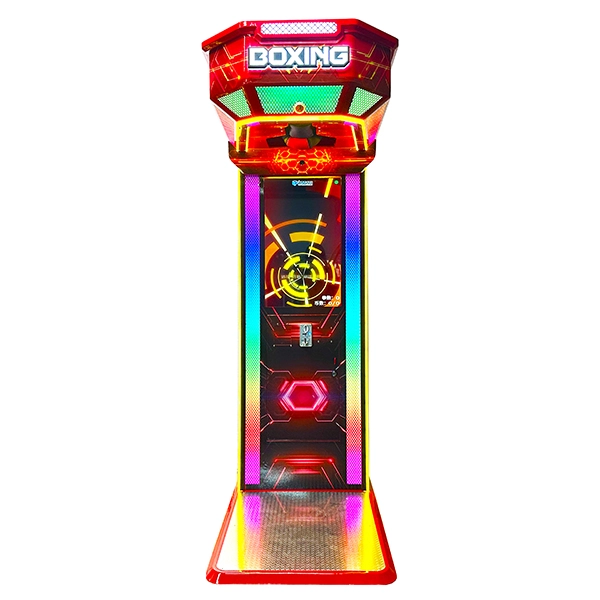
Neofuns Boxing Video Arcade Punching Game Machine
Experience the ultimate fusion of strength and technology with our cutting-edge boxing machine! At its heart lies a vibrant 32-inch HD display that reacts in real-time to every punch—tracking your speed, power, and accuracy with thrilling visuals.
Become the Champion: Shatter records? Our built-in auto-capture camera instantly films your victory moment and immortalizes you on the global leaderboard!
Compete & Conquer: Challenge friends worldwide. Your name in lights awaits!
Immersive Training: From precision drills to knockout games—crystal-clear graphics make every hit explosive.

Neofuns Kids Boxing Punch Machine
The Kids Boxing Punch Machine is an interactive amusement device designed specifically for children, commonly found in amusement parks, shopping malls, or family entertainment centers. Its core function is to allow kids to test their strength, speed, and reaction abilities by punching a target.
 +86 139 2243 9918
 sales@neofuns.com
Copyright © 2026 Neofuns. All Rights Reserved.
Instagram
Facebook
Youtube