
Standard Boxing Machine vs. Punch-and-Kick Machine: Which Venue Fit?
- Understanding the Two Machine Categories
- What Is a Standard Boxing Arcade Machine?
- What Is a Punch-and-Kick Combo Machine?
- Core Mechanical and Sensor Differences
- Side-by-Side Feature and Venue Comparison
- Feature Matrix: Standard vs. Punch-and-Kick
- Venue-by-Venue Fit Analysis
- Safety and Compliance Considerations
- Revenue Strategy and ROI Considerations
- Calculating Payback Period
- Maximizing Revenue Through Engagement Features
- Operational Efficiency and Staff Requirements
- Making the Final Decision: A Practical Framework
- Decision Criteria Checklist
- When to Choose Each Machine Type
- The Role of Brand Customization in Venue Strategy
- Frequently Asked Questions About Boxing Arcade Machines
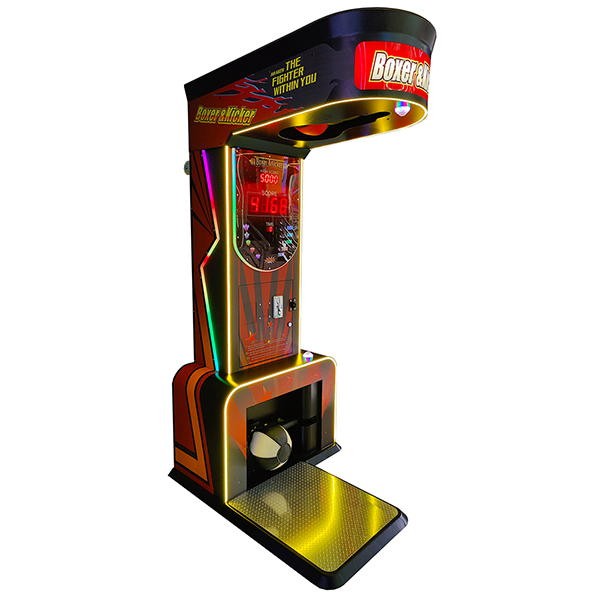
Choosing the right boxing arcade machine for your venue is one of the most consequential equipment decisions an amusement operator can make. Standard punch-only units and full punch-and-kick combo machines serve different audiences, occupy different footprints, and generate different revenue profiles. This article delivers a structured, data-backed comparison so venue owners — from family entertainment centers to sports bars and trampoline parks — can match the right machine to their specific environment, budget, and player demographics.
Understanding the Two Machine Categories
What Is a Standard Boxing Arcade Machine?
A standard boxing arcade machine is a coin- or card-operated unit that measures punch force through a padded striking target connected to a load-cell or piezoelectric sensor. Players throw a single punch — or a rapid sequence of punches — and the machine converts impact force into a numerical score displayed on a digital panel. According to the International Association of Amusement Parks and Attractions (IAAPA), punch-strength testers have been a staple redemption and pay-per-play category since the early 1990s, valued for their low maintenance overhead and universal appeal across age groups. Typical cabinet dimensions run 60–80 cm wide, 60–80 cm deep, and 180–210 cm tall, making them compatible with tight floor plans. The mechanical simplicity — fewer moving parts, no leg-strike zone — translates directly into lower long-term servicing costs.
What Is a Punch-and-Kick Combo Machine?
A punch-and-kick combo machine expands the interaction surface to include both upper-body and lower-body strikes. Separate sensor zones — typically a chest-height punching pad and a mid-to-low striking pad for kicks — record force independently or in combination, producing a composite score. This dual-input design draws inspiration from full-contact combat sports. The World Boxing Association (WBA) notes that recreational boxing participation has grown steadily as fitness-oriented consumers seek low-barrier ways to experience combat sport mechanics without formal training. Combo machines capitalize on this trend by delivering a more physically immersive session. Cabinet footprints are naturally larger — typically 80–110 cm wide and 90–120 cm deep — and the structural frame must withstand combined vertical and horizontal impact loads, requiring heavier-gauge steel construction.
Core Mechanical and Sensor Differences
Both machine types rely on force-measurement technology, but the engineering demands diverge significantly. Standard units commonly use a single-axis load cell rated for repetitive impacts up to 800–1,200 kg of peak force. Combo machines require multi-axis sensing or dual independent sensor arrays to capture kick angles that differ from straight punches. IEEE standards for force-measurement transducers recommend calibration intervals of no more than 6 months for high-traffic commercial applications, a guideline that applies to both machine types but is more operationally critical for combo units given the greater variety of impact vectors. Firmware complexity also increases with combo machines: scoring algorithms must weight punch and kick contributions, manage simultaneous inputs, and prevent false triggers from incidental contact.
Side-by-Side Feature and Venue Comparison
Feature Matrix: Standard vs. Punch-and-Kick
The table below distills the most operationally relevant differences between the two machine categories. Use it as a quick-reference checklist when evaluating your venue's specific requirements.
| Criteria | Standard Boxing Machine | Punch-and-Kick Combo Machine |
|---|---|---|
| Interaction Type | Punch only | Punch + kick |
| Typical Cabinet Footprint | 60–80 cm W × 60–80 cm D | 80–110 cm W × 90–120 cm D |
| Minimum Ceiling Height | 210 cm | 220–230 cm |
| Target Age Group | 8 years and above | 12 years and above (recommended) |
| Average Play Session | 30–60 seconds | 60–120 seconds |
| Throughput (players/hour) | 60–90 | 30–60 |
| Maintenance Complexity | Low | Medium to High |
| Revenue per Play | $0.50–$2.00 | $1.00–$3.00 |
| Brand Customization Options | Limited (decal panels) | Extensive (full wrap, LED, logo) |
| Best Venue Fit | Bars, bowling alleys, small FECs | Large FECs, trampoline parks, sports venues |
Venue-by-Venue Fit Analysis
Not every venue benefits equally from each machine type. Sports bars and bowling alleys typically favor standard boxing arcade machines because floor space is at a High Quality, the adult demographic responds strongly to competitive punch-strength challenges, and the short play cycle keeps queues moving during peak hours. A single standard unit placed near a bar entrance can generate $150–$400 per week in high-traffic locations according to operator benchmarks published by the Amusement and Music Operators Association (AMOA).
Family entertainment centers (FECs), trampoline parks, and large indoor sports complexes are natural homes for punch-and-kick combo machines. These venues already attract physically active visitors who are primed for full-body engagement. Longer play sessions mean higher per-play revenue, and the spectacle of a player executing a powerful kick draws crowd attention that functions as organic marketing within the venue. Research from the Funworld industry publication consistently identifies spectator appeal as one of the top three drivers of repeat play in amusement attractions.
Safety and Compliance Considerations
Both machine categories must comply with applicable product safety standards. In the United States, amusement devices are subject to ASTM International F24 Committee standards for amusement rides and devices, which cover structural integrity, electrical safety, and impact-zone padding specifications. Punch-and-kick machines face stricter scrutiny because kick forces — particularly from adult males — can exceed 800 N, placing higher cyclic stress on frame welds and floor anchors. Operators should verify that any combo machine they purchase carries documentation of compliance with relevant national or regional standards and that the manufacturer provides a clear maintenance schedule. Standard boxing units, while simpler, still require regular pad inspection; a worn striking surface can cause wrist injuries and expose operators to liability.
Revenue Strategy and ROI Considerations
Calculating Payback Period
Return on investment depends on three variables: machine purchase price, average daily revenue, and operating costs (electricity, maintenance, floor space allocation). Standard boxing arcade machines typically retail in the $2,000–$5,000 range, while High Quality punch-and-kick combo units range from $4,000–$9,000 depending on feature set and customization. Using conservative daily revenue figures — $30/day for a standard unit in a mid-traffic venue and $50/day for a combo unit in a high-traffic FEC — payback periods land at approximately 5–9 months and 8–15 months respectively. These figures align with ROI models discussed in operator forums hosted by IAAPA's annual Expo, where equipment vendors and venue owners exchange real-world performance data.
Maximizing Revenue Through Engagement Features
Modern boxing arcade machines have evolved well beyond simple force meters. Features that demonstrably increase play frequency include: digital leaderboards that display top scores and encourage competitive repeat play; LED lighting systems that create visual spectacle and attract walk-up players; timed challenge modes that extend session length; and customizable branding panels that reinforce venue identity. Operators who invest in machines with these engagement layers consistently report 20–35% higher weekly revenue compared to bare-bones units, according to data shared at industry trade events. The psychological principle at work is straightforward — a machine that makes players feel accomplished and visible to peers generates social proof that drives queue formation organically.
Operational Efficiency and Staff Requirements
One underappreciated factor in the standard-vs-combo decision is staffing. Standard boxing machines are largely self-service; a brief instructional graphic on the cabinet is sufficient for most players. Combo machines, particularly in venues serving younger or less experienced players, may benefit from periodic staff presence to demonstrate proper kicking technique and enforce age or height restrictions. This is not a dealbreaker, but it should be factored into total cost of ownership. Venues with lean staffing models — such as unstaffed entertainment zones within larger retail complexes — may find the operational simplicity of a standard unit more practical, while venues with dedicated game-floor attendants can fully leverage the higher engagement ceiling of a combo machine.
Making the Final Decision: A Practical Framework
Decision Criteria Checklist
Before placing a purchase order, venue operators should work through the following decision criteria systematically. First, measure your available floor space precisely — if you cannot allocate at least 1.2 m × 1.5 m of clear play zone (including safety buffer), a standard unit is the safer choice. Second, profile your primary customer demographic: if your venue skews toward adults aged 18–35 who visit in competitive social groups, either machine type works well, but the combo unit will generate more social media content and word-of-mouth. Third, assess your maintenance capacity: do you have a technician on call or a service contract with the manufacturer? If not, the lower mechanical complexity of a standard boxing arcade machine reduces your operational risk. Fourth, consider NeoFuns positioning: a venue that markets itself as a High Quality, immersive entertainment destination benefits more from the visual and experiential impact of a combo machine than a venue where gaming is a secondary amenity.
When to Choose Each Machine Type
Choose a standard boxing machine when: floor space is under 4 m², your audience includes children under 12, you prioritize high throughput over per-play revenue, or you are testing the boxing category for the first time with a lower capital commitment. Choose a punch-and-kick combo machine when: you have adequate floor space and ceiling height, your venue already attracts fitness-conscious or sports-oriented visitors, you want a marquee attraction that doubles as a marketing asset, or you are ready to invest in a machine that supports deeper brand customization and longer-term revenue growth.
The Role of Brand Customization in Venue Strategy
An often-overlooked dimension of the machine selection decision is brand alignment. A boxing arcade machine that carries your venue's logo, color scheme, and visual identity does more than generate play revenue — it reinforces brand recall every time a player interacts with it or shares a photo on social media. Combo machines, with their larger surface area and more elaborate LED systems, offer significantly more canvas for this kind of brand expression. For venue operators building a recognizable entertainment brand, this customization capability can deliver marketing value that meaningfully supplements direct play revenue.
For venues ready to invest in a machine that combines full-body engagement, visual spectacle, and deep brand customization, the Neofuns Punch & Kick 3 Boxing Game Machine represents a purpose-built solution. Its colorful LED lighting system immerses players in the rhythm of punch and kick, turning every strike into a pressure-releasing, crowd-drawing moment. The digital scoreboard delivers the sense of accomplishment that keeps players coming back — and keeps your revenue climbing. Customizable logos and sticker panels let you align the machine perfectly with your venue's brand identity, transforming a revenue-generating asset into a marketing tool. Whether you operate a large FEC, a trampoline park, or a sports entertainment complex, the Neofuns Punch & Kick 3 is engineered to maximize both player satisfaction and operator ROI.
Explore real-world venue deployments and operator success stories on our Boxing Arcade Machine cases page, or reach out directly to our team to discuss which configuration best fits your venue. Contact us at sales@neofuns.com — our specialists are ready to help you make the right investment decision.
Frequently Asked Questions About Boxing Arcade Machines
What is the average payback period for a boxing arcade machine?
Payback periods typically range from 5 to 15 months depending on machine type and venue traffic. Standard units priced at $2,000–$5,000 can return investment in 5–9 months at $30/day revenue, while combo units at $4,000–$9,000 take 8–15 months at $50/day.
How often should a boxing arcade machine be serviced?
IEEE force-measurement standards recommend calibration and inspection every 6 months for high-traffic commercial units. Striking pad surfaces should be visually inspected weekly, and full mechanical checks — including frame welds and sensor accuracy — should occur at least twice per year.
Can a punch-and-kick machine be used in a small venue?
It is possible but not ideal. Combo machines require a minimum clear play zone of approximately 1.2 m × 1.5 m plus safety buffer. Venues with limited floor space below 4 m² are better served by a standard boxing arcade machine with a smaller footprint.
Why do punch-and-kick machines generate higher revenue per play?
Longer play sessions — averaging 60 to 120 seconds versus 30 to 60 seconds for standard units — justify higher per-play pricing of $1.00–$3.00. The added physical engagement and spectator appeal also drive repeat plays and queue formation, increasing overall hourly revenue.
Is a boxing arcade machine suitable for family entertainment centers?
Yes, both machine types are well-suited for FECs, though with different age recommendations. Standard boxing machines are appropriate for players aged 8 and above, while punch-and-kick combo machines are recommended for players aged 12 and above due to higher structural impact loads.
What customization options are available for boxing arcade machines?
Modern combo machines like the Neofuns Punch and Kick 3 offer extensive customization including full cabinet wraps, custom logo panels, and programmable LED lighting. Standard units typically offer limited decal panel options. Brand customization transforms the machine into a dual-purpose revenue and marketing asset.
Top boxer machine game Manufacturers and Suppliers in Swiss

Neofuns Kids Punch Machine: Noise and Volume Guide
Best commercial boxing arcade machine supplier manufacturers and supplier brands
Everything You Need to Know About punching machine market

Neofuns Punch & Kick Boxing Game Machine
High-grade one-piece structure, stable and durable structure. High-definition game screens, combined with special effects and sound effects, achieve multi-dimensional enjoyment of vision, hearing, and touch, and indulge in the fun of punching and kicking.
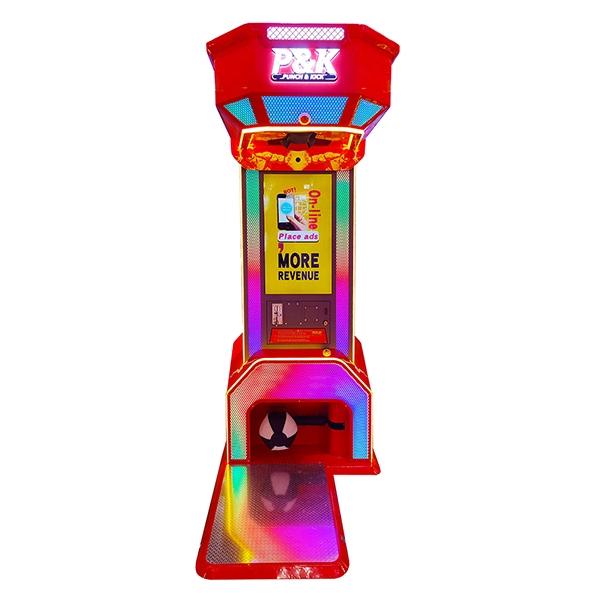
Neofuns Punch & Kick 2 Boxing Game Machine
High-grade one-piece structure, stable and durable structure. High-definition game screens, combined with special effects and sound effects, achieve multi-dimensional enjoyment of vision, hearing, and touch, and indulge in the fun of punching and kicking.
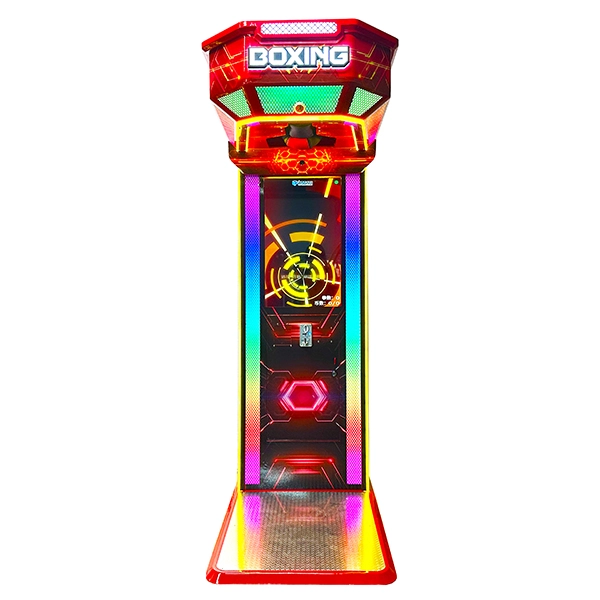
Neofuns Boxing Video Arcade Punching Game Machine
Experience the ultimate fusion of strength and technology with our cutting-edge boxing machine! At its heart lies a vibrant 32-inch HD display that reacts in real-time to every punch—tracking your speed, power, and accuracy with thrilling visuals.
Become the Champion: Shatter records? Our built-in auto-capture camera instantly films your victory moment and immortalizes you on the global leaderboard!
Compete & Conquer: Challenge friends worldwide. Your name in lights awaits!
Immersive Training: From precision drills to knockout games—crystal-clear graphics make every hit explosive.

Neofuns Kids Boxing Punch Machine
The Kids Boxing Punch Machine is an interactive amusement device designed specifically for children, commonly found in amusement parks, shopping malls, or family entertainment centers. Its core function is to allow kids to test their strength, speed, and reaction abilities by punching a target.
 +86 139 2243 9918
 sales@neofuns.com
Copyright © 2026 Neofuns. All Rights Reserved.
Instagram
Facebook
Youtube