
Best Software Features in Modern Boxing Game Arcade Machines
- Why software is the backbone of modern boxing experiences
- Player experience: vision, audio and haptics working together
- Gameplay mechanics and adaptive systems
- Hardware-software synergy
- Core software features to look for in a boxing game arcade machine
- Responsive hit detection and low-latency loop
- Adaptive difficulty, player profiling and matchmaking
- Cloud-based content delivery and over-the-air updates
- Operational, analytics and security features that protect revenue
- Remote diagnostics, telemetry and predictive maintenance
- Analytics: play patterns, session length and monetization
- Security, anti-fraud and data protection
- Software architecture and developer features that ensure longevity
- Modular architecture and plugin support
- Localization, accessibility and multi-language support
- Testing, validation and certification
- Case study: Neofuns Punch & Kick 2 Boxing Game Machine — how software elevates a proven cabinet
- Key software-driven strengths of Neofuns Punch & Kick 2
- How those features translate to operator ROI
- Deployment, maintenance and operator tips
- Implementation checklist and buying guidance
- Checklist before purchase
- Questions to ask the vendor
- Standards and references
- FAQ — Frequently Asked Questions
- Q: What software features most improve player retention on boxing game arcade machines?
- Q: How important is cloud connectivity for arcade machines?
- Q: How does Neofuns Punch & Kick 2 ensure fair scoring?
- Q: Are software updates safe to apply remotely?
- Q: Can analytics help me optimize pricing or promotions?
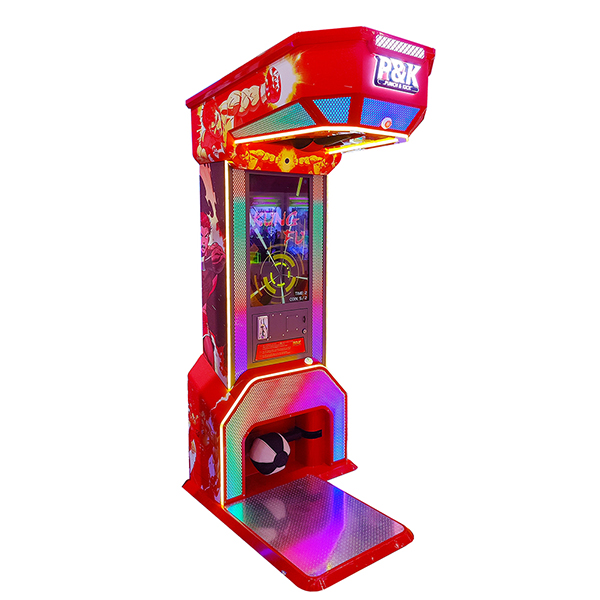
Modern arcade owners and game operators need clear guidance on software features that drive engagement, uptime, and revenue for boxing game arcade machines. This article covers the critical software capabilities to evaluate — from adaptive difficulty and haptic integration to remote diagnostics, analytics, and compliance — showing how these features apply to real hardware like the Neofuns Punch & Kick 2 Boxing Game Machine. The guidance emphasizes measurable operator benefits (longer sessions, repeat players, lower maintenance cost) and follows accepted ergonomics and game-device management principles for commercial arcade deployments.
Why software is the backbone of modern boxing experiences
Player experience: vision, audio and haptics working together
Software controls the visual shaders, dynamic lighting, audio cues, and haptic timing that make a boxing game arcade machine feel responsive and thrilling. In high-quality machines a software engine synchronizes hit detection, particle effects and subwoofer bass to match the force and timing of a punch or kick. That cross-modal synchronization elevates perceived realism and encourages repeat play. Designers should use tested haptic frameworks and game engines to minimize latency and maximize perceived impact — see principles in haptic design summarized in resources like Haptic technology (Wikipedia).
Gameplay mechanics and adaptive systems
Adaptive difficulty driven by software (player profiling, session analysis, short-term skill prediction) keeps sessions fun for newcomers while providing challenge for skilled players. Modern boxing game arcade machine software uses per-player profiles, short-term scoring patterns, and optional machine learning models to adapt boxer AI, combo timing windows, and scoring multipliers in real time.
Hardware-software synergy
Understanding the limits and calibration of sensors (force sensors, accelerometers, pressure mats) requires robust software calibration routines. A one-piece, stable structure such as the Neofuns Punch & Kick 2 Boxing Game Machine benefits when software provides automatic calibration and diagnostics routines that reduce operator service calls and ensure consistent scoring across locations.
Core software features to look for in a boxing game arcade machine
Responsive hit detection and low-latency loop
Accurate hit detection is the most critical feature: software should sample sensors at high rates, apply debouncing and filtering algorithms, and map physical events to in-game outcomes with minimal latency. A responsive feedback loop (under 50 ms total) ensures that the player sees matching visuals and feels haptic responses in sync with their action — a direct contributor to perceived fairness and enjoyment.
Adaptive difficulty, player profiling and matchmaking
Track short-term performance (last 3–10 sessions), aggregate long-term skill, and use that data to tune opponent AI or scoring sensitivity. For multiplayer or networked competition, software should include matching logic that pairs players or ranks them on dynamic leaderboards, encouraging competitive replay.
Cloud-based content delivery and over-the-air updates
Modern machines must support secure OTA updates for game content, balancing new features and bug fixes with machine stability. Cloud-managed content enables operators to push seasonal events, new visual skins, or adjusted scoring parameters without technician visits. For commercial deployments, software should include staged rollout and rollback capabilities to minimize downtime.
Operational, analytics and security features that protect revenue
Remote diagnostics, telemetry and predictive maintenance
Software that reports machine health (CPU/GPU temps, sensor drift, cabinet door open events, payment system status) to a remote dashboard reduces mean-time-to-repair and drives down service cost. Predictive maintenance uses telemetry trends to flag components before they fail — improving uptime and sustaining revenue streams.
Analytics: play patterns, session length and monetization
Integrated analytics answer key operator questions: Which game modes have longest session time? Which difficulty levels convert to additional credits? Are certain locations generating most revenue? Software should export anonymized metrics and visual reports to help operators tune pricing, prize structures, and promotions.
Security, anti-fraud and data protection
Commercial-grade machines must follow secure coding practices, encrypt sensitive communication, and include anti-tamper checks to prevent coin or credit fraud. Compliance with data protection best practices and secure payment integrations protects players and operators. For design and ergonomics guidance in human-machine interaction, see ISO 9241 (Ergonomics of human-system interaction).
Software architecture and developer features that ensure longevity
Modular architecture and plugin support
A modular software stack separates core engine, input/sensor drivers, networking, UI, and monetization modules. That design simplifies adding new game modes, skins, or operator utilities without reworking scoring logic. Look for machines that provide a documented API for operators and trusted third-party content creators.
Localization, accessibility and multi-language support
Support multiple languages, regional regulations, and accessibility options (visual contrast settings, reduced motion, alternative input mapping) so the machine can be deployed across markets and venues. Proper internationalization in software increases addressable market and reduces compliance risk.
Testing, validation and certification
Software should include automated test suites for input handling, scoring, and network failover modes. Adhering to industry best practices and developer community guidance (for example resources available via the International Game Developers Association) demonstrates commitment to reliability and developer support.
Case study: Neofuns Punch & Kick 2 Boxing Game Machine — how software elevates a proven cabinet
Product snapshot:
High-grade one-piece structure, stable and durable structure. High-definition game screens, combined with special effects and sound effects, achieve multi-dimensional enjoyment of vision, hearing, and touch, and indulge in the fun of punching and kicking.
Key software-driven strengths of Neofuns Punch & Kick 2
The Neofuns Punch & Kick 2 Boxing Game Machine pairs a durable physical cabinet with software that optimizes experience and operator outcomes. Software features to highlight include: real-time sensor calibration, low-latency haptic timing, cloud update pipeline for seasonal content, operator dashboards for telemetry and earnings, and player profiling for adaptive difficulty.
How those features translate to operator ROI
Example operator benefits: higher retention from better player experience (longer sessions), reduced onsite service via remote diagnostics, and increased ticket or credit sales because of engaging seasonal content. Below is a quick comparison table showing how top features map to operator outcomes.
| Software Feature | What it does | Operator Benefit |
|---|---|---|
| Low-latency hit detection | Maps sensor input to game outcome in under 50 ms | Better player satisfaction, higher repeat play |
| Cloud OTA updates | Push new game modes and skins remotely | New revenue opportunities, seasonal promotions |
| Remote diagnostics | Real-time machine health reporting | Lower maintenance cost, higher uptime |
| Analytics dashboard | Shows session length, revenue, and retention | Data-driven pricing and location decisions |
Deployment, maintenance and operator tips
- Schedule weekly automatic backups of local logs and a monthly firmware audit to ensure update integrity.
- Use the operator dashboard to set local difficulty caps and promotional multipliers per location based on player demographics.
- Enable anonymized analytics sharing with the manufacturer to receive collective training sets for better adaptive AI updates.
Implementation checklist and buying guidance
Checklist before purchase
- Confirm availability of OTA updates and rollback capability.
- Verify remote diagnostics and a clear SLA for firmware and sensor issues.
- Confirm software supports multi-language UI and has documented API for integration with venue loyalty systems.
Questions to ask the vendor
- How are player profiles stored and protected? Is encryption applied in transit and at rest?
- What is the average time-to-update for critical patches? Is there a staged deployment process?
- Can the machine operate offline without losing key functionality? How does it resync telemetry after reconnection?
Standards and references
Designers and operators can consult public resources for guidance on human factors and industry best practices. Helpful references include the Arcade game overview (Wikipedia), haptics design principles at Haptic technology (Wikipedia), and ergonomics standards like ISO 9241. The International Game Developers Association also offers developer-focused best practices for usability and testing.
FAQ — Frequently Asked Questions
Q: What software features most improve player retention on boxing game arcade machines?
A: Responsive hit detection, synchronized haptics and audio, adaptive difficulty, and regular content updates are the most impactful. These features directly improve session satisfaction and encourage repeat play.
Q: How important is cloud connectivity for arcade machines?
A: Very important for updates, analytics, and remote diagnostics, but machines should also maintain core gameplay offline and resync when connectivity is restored to avoid revenue interruptions.
Q: How does Neofuns Punch & Kick 2 ensure fair scoring?
A: The cabinet combines high-rate sensors with software debouncing and calibration routines to map force to points consistently. Software also provides operator-facing calibration and logs for auditing scoring anomalies.
Q: Are software updates safe to apply remotely?
A: Yes, when the vendor provides signed updates, staged rollouts and rollback mechanisms. Operators should confirm update signing, versioning, and backup procedures before enabling automatic OTA updates.
Q: Can analytics help me optimize pricing or promotions?
A: Absolutely. Analytics about session length, conversion (players per hour), and mode popularity allow operators to experiment with pricing, time-limited modes, and loyalty programs to boost revenue.
If you want to learn more about how these software features are implemented in the Neofuns Punch & Kick 2 Boxing Game Machine or to request a demo, contact our sales team or view the product page for full specs and purchasing options.
View Neofuns Punch & Kick 2 Boxing Game Machine | Contact Sales / Support
What is arcade punching machine buy ?
Why choose NeoFuns as your buy a punch machine supplier
Wholesale punching box machine manufacturer and supplier
OEM/ODM arcade punching machine price Manufacturers and Suppliers
FAQS
Who are we?
As a 20 years R&D experience manufacturer,we specialized in boxing game machines, holding 50+ patents.
How to ensure product quality?
The products are produced in strict accordance with the production process. All core accessories are fully inspected before going online. After production is completed, a non-stop aging test for at least 8-12 hours. It can only be packaged after being fully inspected and signed by QC teams. Stable quality, 2% failure rate, good customer reputation.
Can I customize special specifications and packaging?
Yes, we support customization of appearance, program, organization, etc.
How long will it take for me to receive the goods?
Standard products are delivered within 2 days; customized products will be delivered on time after all order information is confirmed, or even delivered in advance. For large quantities, it usually takes 35-40 days. Small customized, delivery time of within 30 days.
Whether to support samples?
Yes, the minimum order is 1 unit, and the customer pays the sample fee and shipping fee.

Neofuns Boxing Prize Arcade Punching Game Machine
Test your strength and aim for glory! Players unleash thrilling punches on our dynamic boxing pad. Hit hard, score big, and watch the excitement build! Reach the target score, and WIN A PRIZE INSTANTLY! Perfect for arcades, family entertainment centers, bars, and events—this high-energy attraction draws crowds, boosts revenue, and keeps customers coming back for that winning punch!

Neofuns Kids Boxing Punch Machine
The Kids Boxing Punch Machine is an interactive amusement device designed specifically for children, commonly found in amusement parks, shopping malls, or family entertainment centers. Its core function is to allow kids to test their strength, speed, and reaction abilities by punching a target.
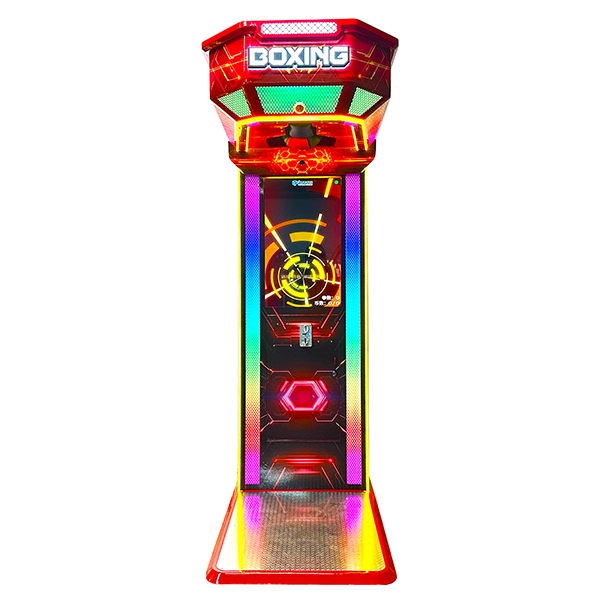
Neofuns Boxing Video Arcade Punching Game Machine
Experience the ultimate fusion of strength and technology with our cutting-edge boxing machine! At its heart lies a vibrant 32-inch HD display that reacts in real-time to every punch—tracking your speed, power, and accuracy with thrilling visuals.
Become the Champion: Shatter records? Our built-in auto-capture camera instantly films your victory moment and immortalizes you on the global leaderboard!
Compete & Conquer: Challenge friends worldwide. Your name in lights awaits!
Immersive Training: From precision drills to knockout games—crystal-clear graphics make every hit explosive.

Neofuns Ultimate Big Punch 3 Boxing Game Machine
This boxing machine is a realistic and challenging boxing arcade game machine with a simple and stylish appearance. The external LED light keeps changing, and it will be the focus no matter where it is placed. Each round supports two punches, and the prizes can be set as raffles or drink rewards, and it has a refrigeration function. The appearance and color can be customized, and the coin acceptor, bill acceptor, or card reader can be customized.
 +86 137 1928 7841
  sales@neofuns.com
Copyright © 2025 Neofuns. All Rights Reserved.
Instagram
Facebook
Youtube