
How to Evaluate Punching Machine Performance and Scoring
- Key Performance Metrics for Punching Machines
- Impact Detection Accuracy and Sensitivity
- Response Time and Latency
- Repeatability, Drift and Environmental Stability
- Scoring Systems and Ensuring Scoring Integrity
- Types of Scoring Algorithms
- Fraud, False Positives, and Anti-Gaming Measures
- Fairness and Standardization (Why Standards Matter)
- Testing, Calibration and Maintenance Protocols
- Factory Calibration and On-Site Acceptance Tests
- Routine Field Calibration and Drift Correction
- Maintenance and Durability Testing
- Operational Considerations, Data and Use Cases
- Metrics to Track for Operators
- Comparative Performance — Example Table
- Data Logging, Telemetry and Remote Management
- Testing Protocols and Reference Resources
- Simple On-Site Test Procedures
- Authoritative Resources and Standards
- FAQ — Frequently Asked Questions
- Q: How often should I calibrate my punching machine?
- Q: What causes false positives or missed hits?
- Q: Can I change the scoring sensitivity for different player types?
- Q: How do I verify the latency of scoring?
- Q: Is the Neofuns Punch & Kick 2 suitable for competitive events?
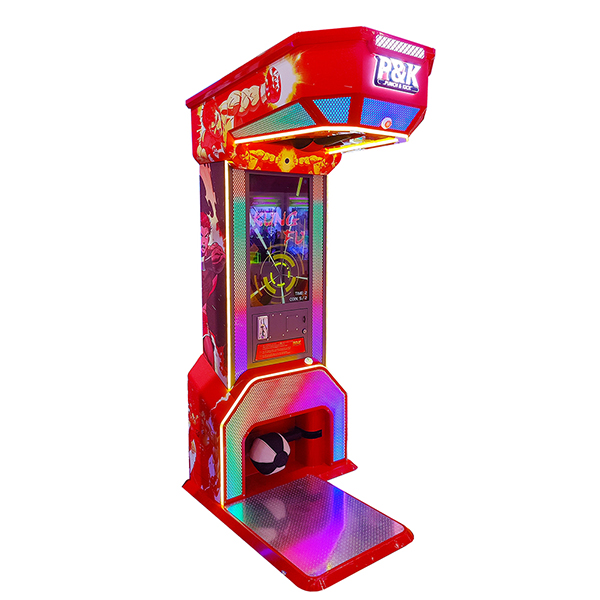
When assessing a punching machine for arcade, gym, or entertainment use, operators need clear, data-driven ways to evaluate performance and scoring integrity. This guide distills the most important performance metrics — accuracy, response time, repeatability, durability, and user experience — and explains scoring systems, calibration methods, and acceptance tests you can run on the floor. We use the Neofuns Punch & Kick 2 Boxing Game Machine as a reference model: a high-grade one-piece structure with stable, durable construction and high-definition game screens combined with special effects and sound effects to deliver multi-dimensional enjoyment of vision, hearing, and touch, and indulge users in the fun of punching and kicking.
Key Performance Metrics for Punching Machines
Impact Detection Accuracy and Sensitivity
Impact detection accuracy is the percentage of real hits that are correctly detected and scored. Accuracy depends on sensor type (piezoelectric, load cell, accelerometer), signal processing, and the scoring algorithm. For reliable player experience and fair competition, aim for detection accuracy ≥ 95% under standard test conditions. When measuring accuracy, test a range of force levels (light taps, medium hits, full-power strikes) and different strike locations on the pad to verify consistent sensitivity across the target surface.
Response Time and Latency
Response time is the interval between an impact and the machine's recorded hit/score output. Low latency (ideally < 30 ms for arcade responsiveness) improves perceived fairness and gameplay feel. Measure end-to-end latency by using a high-speed camera or an oscilloscope to capture the moment of impact and the moment the system registers the hit (or sends the score event to the game engine). Machines with good hardware and optimized firmware will keep latency below the perceptible threshold, avoiding delays that confuse players.
Repeatability, Drift and Environmental Stability
Repeatability (consistency across repeated identical impacts) and drift (change in sensor baseline over time or temperature) affect long-term fairness. Evaluate repeatability by applying the same force multiple times (e.g., 30 strikes at a fixed force) and calculating the coefficient of variation. For environmental stability, test at different ambient temperatures and humidity levels; a robust punching machine will incorporate temperature compensation or software calibration to maintain stable thresholds. Documented quality management standards like ISO 9001 provide frameworks for manufacturers to control and document these properties: ISO 9001.
Scoring Systems and Ensuring Scoring Integrity
Types of Scoring Algorithms
Scoring algorithms translate sensor events into points. Common approaches include:
- Threshold-based scoring: a hit counts if measured force exceeds a preset threshold.
- Gradient scoring: points scale with measured impact magnitude (e.g., 1–10).
- Pattern detection: detecting combos, target zones, or timing windows for bonus points.
Threshold-based systems are simple and robust, but require careful calibration. Gradient scoring delivers richer gameplay but depends on sensor linearity and calibration. Choose an algorithm consistent with your use case: competitive scoring requires strict thresholds and auditability; entertainment modes can use gradients and smoothing to maximize fun.
Fraud, False Positives, and Anti-Gaming Measures
Operators must prevent 'gaming' the system (deliberate tricks to inflate scores). Typical anti-gaming measures include:
- Multi-parameter validation — combine force magnitude with impact waveform shape or rise time to distinguish a real punch from a tool-assisted tap.
- Cooldown windows — temporarily suppress consecutive hits from the exact same location within an unreasonably short interval to avoid mechanical replay tricks.
- Audit logs — store raw hit timestamps and magnitudes for post-event review in competitive settings.
Validating waveform signatures against known impact templates increases resistance to hacks or physical tampering.
Fairness and Standardization (Why Standards Matter)
In competitive or pay-per-play environments, scoring must be perceived as fair. Referencing established sport or testing organizations helps justify procedures and settings. For example, boxing as a sport is governed by organizations like the International Boxing Association (IBA), which define competitive rules and scoring philosophies: IBA. While arcade machines are not competitive boxing in the same sense, aligning scoring transparency and calibration protocols to known standards improves trust and operator confidence.
Testing, Calibration and Maintenance Protocols
Factory Calibration and On-Site Acceptance Tests
When you accept a new punching machine on-site, follow a standardized acceptance protocol:
- Visual inspection for structural integrity and cabinet alignment.
- Run a calibration routine that the manufacturer provides. The Neofuns Punch & Kick 2 Boxing Game Machine ships with a one-piece, high-grade structure and factory-tuned sensors to minimize field adjustments.
- Perform a 30-impact test across low, medium, and high force levels at multiple pad locations. Record detection rate, average score, and latency.
Keep a signed acceptance report and attach it to the maintenance log for warranty compliance.
Routine Field Calibration and Drift Correction
Calibration frequency depends on throughput and environment. Typical schedules:
- High-traffic arcades: weekly automated self-checks, monthly manual audits.
- Gyms or low-throughput locations: monthly automated checks, quarterly manual audits.
Automated self-checks should measure baseline noise, low-force detection, and response time. Some systems allow remote firmware updates and remote diagnostics, enabling centralized management of calibration parameters across a fleet.
Maintenance and Durability Testing
Durability encompasses mechanical life (material fatigue of strike surfaces and mounting hardware) and electronic life (sensor and board longevity). Perform a basic stress test by running an endurance cycle (e.g., simulate 1000 impacts at varying forces) and verify no performance degradation. Maintain spare parts inventory for high-wear components like impact pads, springs, and protective layers. Manufacturer-recommended maintenance fosters longevity — Neofuns' one-piece structure and robust construction minimize frequent mechanical tuning.
Operational Considerations, Data and Use Cases
Metrics to Track for Operators
Track the following KPIs to monitor machine performance and profitability:
- Uptime percentage and mean time between failures (MTBF).
- Average scores per play and score distribution (helps detect drift or tampering).
- Throughput (plays per hour) and revenue per hour.
- Customer feedback on responsiveness and perceived fairness.
Comparative Performance — Example Table
The table below provides a comparative example of typical performance ranges for three categories: High Quality arcade models (like Neofuns Punch & Kick 2), standard arcade machines, and low-cost consumer units. Use this as a guideline for procurement and acceptance testing.
| Metric | Neofuns Punch & Kick 2 (High Quality) | Standard Arcade Unit | Low-cost Consumer Unit |
|---|---|---|---|
| Detection Accuracy (typical) | 95–99% | 90–95% | 75–88% |
| Response Time (ms) | 15–30 ms | 30–60 ms | 60–120 ms |
| Repeatability (CV) | 2–6% | 5–10% | 10–20% |
| Recommended Calibration Frequency | Monthly automated; quarterly manual | Bi-weekly automated; quarterly manual | Monthly manual |
| Typical Use Case | High-traffic arcades, family entertainment centers, competitive fun modes | Small arcades, bars, mid-traffic locations | Home use and casual training |
Data Logging, Telemetry and Remote Management
Modern punching machines often offer telemetry: anonymized usage data, firmware health checks, and daily summaries of play sessions. Centralized dashboards help operators spot anomalies (sudden jumps in average scores or spikes in latency). If you run multiple Neofuns Punch & Kick 2 units, consider a fleet management plan that schedules updates, distributes calibration parameters, and aggregates play statistics to inform promotion and placement decisions.
Testing Protocols and Reference Resources
Simple On-Site Test Procedures
Here are reproducible tests you can run with minimal equipment:
- Single-point accuracy: strike the same center point 30 times at a consistent force (use a calibrated punching device or a trained operator aiming to replicate force). Record detection rate and score variance.
- Multi-zone test: strike 5 predefined target zones 10 times each to confirm uniform sensitivity.
- Latency test: capture impact and notification with a smartphone high-speed video at 240 fps; count frames between impact and on-screen feedback and convert to ms.
Authoritative Resources and Standards
Supporting your testing and procurement decisions with reputable sources strengthens E-E-A-T. Useful references include general sport rules and context from Wikipedia (Boxing), quality management standards from ISO, and governance frameworks from the International Boxing Association. For calibration and measurement traceability guidance, organizations such as the National Institute of Standards and Technology (NIST) provide principles relevant to sensor and instrument calibration.
FAQ — Frequently Asked Questions
Q: How often should I calibrate my punching machine?
A: Calibration cadence depends on usage. For high-traffic public arcades, run automated self-checks weekly and manual audits monthly or quarterly. For low-traffic or private installations, monthly manual checks are usually sufficient. Always follow manufacturer recommendations; Neofuns provides baseline factory calibration and suggested field check intervals.
Q: What causes false positives or missed hits?
A: False positives can be caused by mechanical vibrations, electrical noise, or intentional tampering. Missed hits are often due to worn impact pads, degraded sensors, or improper threshold settings. Run a diagnostic that includes baseline noise measurement, visual inspection, and the multi-zone test described above to isolate the root cause.
Q: Can I change the scoring sensitivity for different player types?
A: Yes. Many machines support multiple game modes with different sensitivity and scoring curves (training vs. pro vs. kid mode). Ensure each mode has documented calibration settings and that operators understand the implications for fairness and revenue tracking.
Q: How do I verify the latency of scoring?
A: Use a high-frame-rate camera (120–240 fps or higher). Record an impact event and the on-screen reaction, then count frames between impact and feedback. Multiply frames by frame time (for 240 fps, 1 frame ≈ 4.17 ms). Alternatively, use lab equipment like oscilloscopes for electronic measurement.
Q: Is the Neofuns Punch & Kick 2 suitable for competitive events?
A: The Neofuns Punch & Kick 2 Boxing Game Machine is built with a high-grade one-piece structure and professional sensors designed for consistent performance, making it suitable for competitive amusement events and high-traffic venues. For formal sport competition, align rules and scoring transparency with governing bodies and maintain detailed audit logs.
If you need a concise acceptance checklist or custom calibration protocol tailored to your venue, contact our technical support team or check the product page for Neofuns Punch & Kick 2 Boxing Game Machine for detailed specs and downloadable calibration documents.
Contact & View Product:
To view product specifications, request calibration guides, or schedule a demo for Neofuns Punch & Kick 2 Boxing Game Machine, please contact our sales team or visit the product page. For immediate assistance, email support@neofuns.example or call +1-800-NEOFUNS (example). Click here to view product and request a quote: Neofuns Punch & Kick 2 Boxing Game Machine.
References: Wikipedia (Boxing) (link), ISO 9001 Quality Management (link), International Boxing Association (link), NIST (link).
What are the different types of arcade punching bag machine?
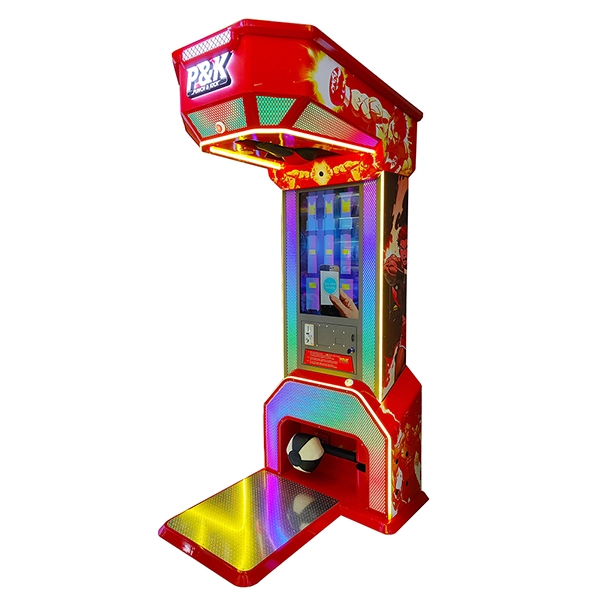
Safety and Durability: Choosing a Robust Boxing Game Machine
Customization Options for Boxing Game Arcade Machines
Top needle punching machine Manufacturers and Suppliers in French
FAQS
How long will it take for me to receive the goods?
Standard products are delivered within 2 days; customized products will be delivered on time after all order information is confirmed, or even delivered in advance. For large quantities, it usually takes 35-40 days. Small customized, delivery time of within 30 days.
Can I customize special specifications and packaging?
Yes, we support customization of appearance, program, organization, etc.
Who are we?
As a 20 years R&D experience manufacturer,we specialized in boxing game machines, holding 50+ patents.
Whether to support samples?
Yes, the minimum order is 1 unit, and the customer pays the sample fee and shipping fee.
Can you provide corresponding prize purchasing services?
Yes, we provide prize options,one-stop shopping.
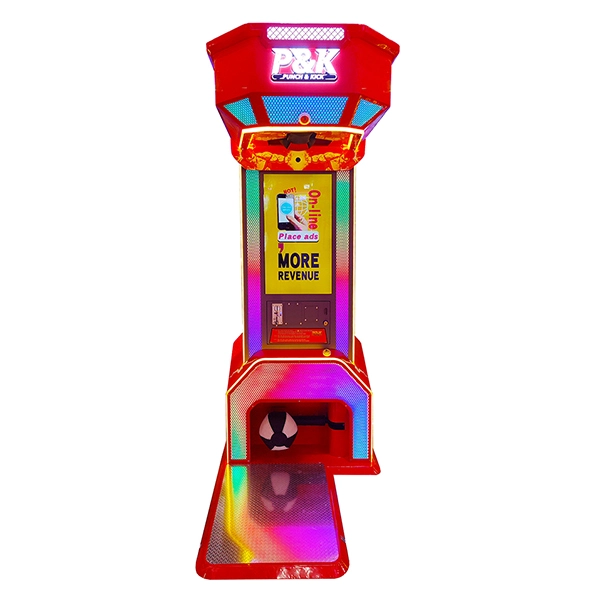
Neofuns Punch & Kick 2 Boxing Game Machine
High-grade one-piece structure, stable and durable structure. High-definition game screens, combined with special effects and sound effects, achieve multi-dimensional enjoyment of vision, hearing, and touch, and indulge in the fun of punching and kicking.

Neofuns Kids Boxing Punch Machine
The Kids Boxing Punch Machine is an interactive amusement device designed specifically for children, commonly found in amusement parks, shopping malls, or family entertainment centers. Its core function is to allow kids to test their strength, speed, and reaction abilities by punching a target.
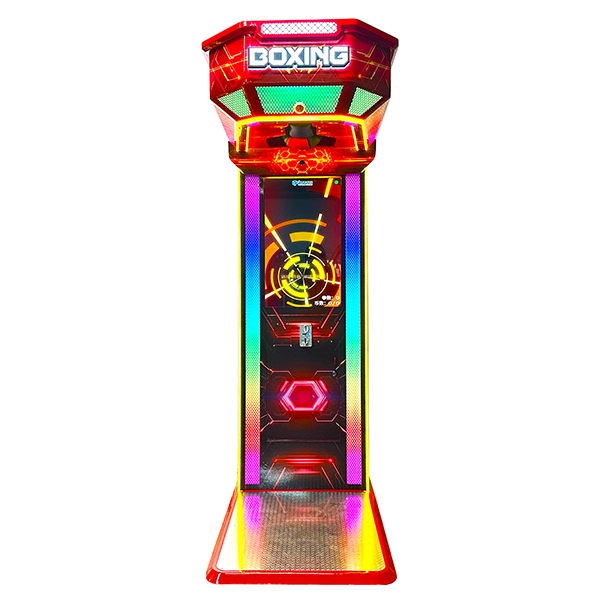
Neofuns Boxing Video Arcade Punching Game Machine
Experience the ultimate fusion of strength and technology with our cutting-edge boxing machine! At its heart lies a vibrant 32-inch HD display that reacts in real-time to every punch—tracking your speed, power, and accuracy with thrilling visuals.
Become the Champion: Shatter records? Our built-in auto-capture camera instantly films your victory moment and immortalizes you on the global leaderboard!
Compete & Conquer: Challenge friends worldwide. Your name in lights awaits!
Immersive Training: From precision drills to knockout games—crystal-clear graphics make every hit explosive.

Neofuns Boxing Champion Arcade Punching Game Machine
The colorful lights can make players immerse themselves in the punch of boxing, and every punch is a release of pressure; the digital scoreboard allows players to feel the sense of accomplishment brought by each punch, making people unable to stop and increasing your venue revenue; the customizable logo and stickers help you improve your brand awareness.
 +86 137 1928 7841
  sales@neofuns.com
Copyright © 2025 Neofuns. All Rights Reserved.
Instagram
Facebook
Youtube