
Top Operator-Friendly Boxing Game Arcade Machine Controls
- Why Operator-Focused Controls Improve Revenue and Uptime
- Operational priorities for arcade operators
- How ergonomics and standards relate to control design
- Industry context: arcade trends and expectations
- Control Types: Pros, Cons, and Operator Considerations
- Sensor-based hit detection (force/pressure sensors)
- Accelerometer and IMU-based controls
- Mechanical switches and optical sensors
- Comparison table: control systems at a glance
- Design and Maintenance Best Practices for Operators
- Modularity and tool-free access
- Clear diagnostics and remote telemetry
- Maintenance schedule and calibration workflow
- Operator-Friendly Features to Look for in a Boxing Game Cabin
- Payment and access systems that simplify operations
- Robust human-interface design for players and technicians
- Safety, accessibility, and regulatory considerations
- Neofuns Punch & Kick 2 Boxing Game Machine: Operator-Focused Features
- Why operators choose Neofuns Punch & Kick 2
- Serviceability highlights
- Business and player engagement features
- Installation, Troubleshooting, and Long-Term Care
- Pre-install checklist
- Common troubleshooting steps
- Training quick-start for technicians
- FAQ — Frequently Asked Questions
- Q: What control type gives the best balance of durability and scoring accuracy?
- Q: How often should I calibrate sensors on a boxing game arcade machine?
- Q: Can I retrofit a legacy cabinet with modern operator-friendly controls?
- Q: What are the key diagnostics an operator should expect?
- Q: How do I reduce downtime during busy weekends?
The modern arcade operator needs game cabinets that are intuitive to maintain, quick to service, and reliable under high throughput. This article reviews operator-friendly control designs for a boxing game arcade machine, explaining control types, maintenance workflows, calibration tips, and business-impacting features. We highlight practical trade-offs and industry best practices so operators can maximize uptime, player satisfaction, and revenue.
Why Operator-Focused Controls Improve Revenue and Uptime
Operational priorities for arcade operators
For location-based entertainment businesses, an operator-friendly boxing game arcade machine reduces mean time to repair (MTTR), lowers operating costs, and improves customer throughput. Priorities include simple access to electronics, modular components (sensors, displays, payment systems), clear diagnostics, and robust housing that resists abuse. These factors drive consistent player experience and fewer out-of-service hours.
How ergonomics and standards relate to control design
Designing controls with human ergonomics in mind reduces operator strain during servicing and improves player comfort. International standards on human-system interaction and ergonomics (for example, ISO guidance on usability and human-centred design) provide useful frameworks for control layouts and maintenance accessibility. See ISO guidance on ergonomics and human-system interaction for further detail (ISO).
Industry context: arcade trends and expectations
Arcade games remain popular in commercial centers, with operators expecting higher reliability and remote manageability from modern cabinets. The arcade and attractions trade association IAAPA offers operator resources and market insights that validate investment in higher-quality control systems and remote telemetry (IAAPA). For general background on arcade game evolution, see the Arcade game overview on Wikipedia (Wikipedia).
Control Types: Pros, Cons, and Operator Considerations
Sensor-based hit detection (force/pressure sensors)
Many modern boxing game arcade machines use embedded force sensors or piezoelectric sensors to detect punch or kick intensity. Benefits include high repeatability and clear calibration paths, but sensors can be sensitive to placement and require periodic recalibration. For operators, modular sensor boards with quick connectors and documented calibration routines drastically reduce downtime.
Accelerometer and IMU-based controls
Some systems use accelerometers or IMUs in gloves or target pods to measure strike dynamics. These offer flexible placement and detailed motion data, useful for advanced scoring and analytics. However, wireless IMUs require battery management and can be more complex to troubleshoot compared to wired sensors. Operators should look for hot-swappable batteries, clear LED status indicators, and remote diagnostics.
Mechanical switches and optical sensors
Mechanical limit switches and optical break-beam sensors remain common for simpler, low-cost machines. They are easy to test and replace but may lack the nuance needed for accurate force-based scoring on a boxing game arcade machine. From an operator’s standpoint, choose components with standardized connectors and keep a small inventory of spares for rapid replacement.
Comparison table: control systems at a glance
| Control Type | Durability | Accuracy | Maintenance Effort | Operator-Friendly Features |
|---|---|---|---|---|
| Force / Pressure Sensors | High | High (after calibration) | Moderate (calibration required) | Modular boards, quick connectors, calibration tools |
| IMU / Accelerometer | Moderate | High (motion analysis) | High (battery, pairing, firmware) | LED status, hot-swap batteries, wireless diagnostics |
| Mechanical / Optical | High (mechanical) | Low–Moderate | Low (straightforward replacement) | Simple replacement parts, visible indicators |
Design and Maintenance Best Practices for Operators
Modularity and tool-free access
Operator-friendly cabinets use modular subsystems: sensor arrays, payment modules, PC/PCB assemblies, and display units should be removable without specialized tools. Quick-release latches and color-coded connectors cut service time. When evaluating boxing game arcade machine designs, verify whether the cabinet supports tool-free removal of common service items.
Clear diagnostics and remote telemetry
Built-in diagnostics (self-test mode, sensor live-view, error logs) are essential for quick triage. Remote telemetry (cloud or local network) allows operators to receive alerts, monitor coin/card transactions, and view sensor health statistics before arriving on site. Machine analytics also support business decisions like pricing and feature promotions. For operators considering industry-wide best practices on attractions safety and management, IAAPA resources can be helpful (IAAPA).
Maintenance schedule and calibration workflow
Create standardized checklists: daily visual checks, weekly sensor integrity tests, monthly calibration verification, and firmware updates on a planned schedule. The calibration workflow should be simple: a guided menu on the machine’s operator panel where the technician follows steps and stores calibration baselines. Documented procedures and printable logs help with long-term consistency and handover between technicians.
Operator-Friendly Features to Look for in a Boxing Game Cabin
Payment and access systems that simplify operations
Modern operators prefer card and contactless payment systems with voucher/kiosk integration. Hybrid systems (coin acceptor + cashless) reduce lost revenue opportunities. Look for payment modules that can be swapped quickly and support standard communication protocols for back-office reconciliation.
Robust human-interface design for players and technicians
Controls should balance player experience and serviceability. For example, replaceable glove or pad covers and quick-release mounting plates reduce wear-related downtime. An easily visible operator display that shows uptime, firmware version, and error codes helps the technician make fast decisions on repairs.
Safety, accessibility, and regulatory considerations
Ensure the machine meets local safety regulations for arcade equipment, especially in high-traffic family venues. Follow UI and ergonomic design guidelines (see ISO human-centred design recommendations (ISO)) and provide sufficient padding, rounded edges, and clear age/height guidance. Additionally, highlight the health-positive aspects of active games—WHO notes the benefits of physical activity which can be a selling point for family locations (WHO).
Neofuns Punch & Kick 2 Boxing Game Machine: Operator-Focused Features
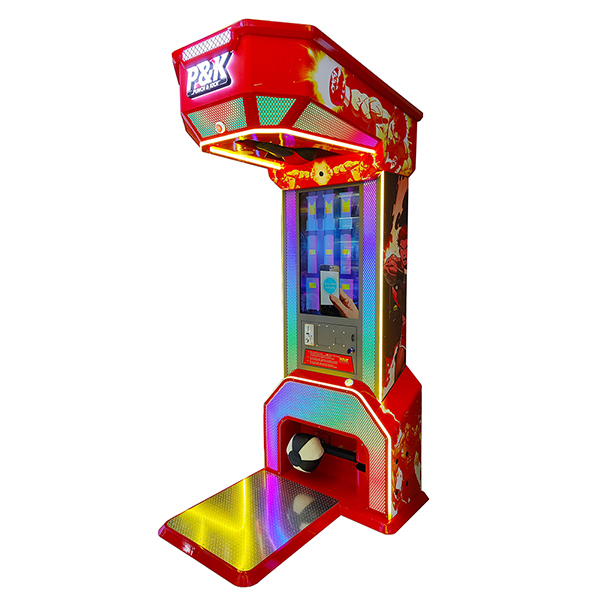
High-grade one-piece structure, stable and durable structure. High-definition game screens, combined with special effects and sound effects, achieve multi-dimensional enjoyment of vision, hearing, and touch, and indulge in the fun of punching and kicking.
Why operators choose Neofuns Punch & Kick 2
The Neofuns Punch & Kick 2 Boxing Game Machine is built as a high-grade one-piece structure for durability in busy venues. Its design emphasizes easy access to internal components, ruggedized mounting for sensors, and a high-definition display that reduces field service calls due to screen issues. The combination of audio-visual effects and robust sensing makes it both spectator-friendly and operator-efficient.
Serviceability highlights
Key operator-focused elements include modular sensor mounts with quick electrical connectors, a front-access service panel, captive fasteners to prevent lost parts, and a documented calibration utility in the operator menu. These features reduce average service time and help maintain consistent scoring behavior across sites.
Business and player engagement features
The cabinet supports multiple play modes and difficulty scaling, enabling operators to run promotions (e.g., high-score competitions) and to tune play length for optimal revenue per hour. Remote status reporting and coinless payment support are available to streamline modern operations.
Installation, Troubleshooting, and Long-Term Care
Pre-install checklist
Before installation verify: stable floor surface, sufficient clearance for ventilation, reliable network connectivity (if remote telemetry is used), and power supply within specified tolerances. Confirm firmware and software versions and perform a full system test on-site during installation.
Common troubleshooting steps
When a boxing game arcade machine reports sensor errors: 1) run the machine’s built-in diagnostics; 2) check connectors and cable continuity; 3) swap the suspect sensor with a known-good module; 4) run calibration routine and verify baseline values. For screens or audio issues, consult the display’s service menu and check backlights, speaker wiring, and fuses.
Training quick-start for technicians
Provide a one-page quick-start for new technicians: common error codes, fuse and connector locations, sensor replacement steps, and calibration procedure. Short instructional videos stored on a central server or accessible via QR code on the machine accelerate onboarding and reduce human error.
FAQ — Frequently Asked Questions
Q: What control type gives the best balance of durability and scoring accuracy?
A: Force/pressure sensors with sealed housings typically offer the best balance. They are durable when mounted properly, provide good accuracy after calibration, and are relatively easy to replace. Combining them with mechanical reinforcement and replaceable impact surfaces increases lifespan.
Q: How often should I calibrate sensors on a boxing game arcade machine?
A: Perform a calibration check monthly under normal usage conditions. High-volume locations may benefit from weekly quick checks. Always run a full calibration after any sensor replacement, major firmware update, or significant environmental change.
Q: Can I retrofit a legacy cabinet with modern operator-friendly controls?
A: Many cabinets can be upgraded with modular sensor kits, modern payment modules, and remote telemetry. Evaluate available retrofit kits for compatibility, and consider the total cost vs. replacement, especially if the cabinet structure is worn or ventilation is inadequate.
Q: What are the key diagnostics an operator should expect?
A: Useful diagnostics include sensor live-read values, error logs with timestamps, payment module status, network connectivity health, and system uptime counters. Look for cabinets that provide both local and remote diagnostics for rapid triage.
Q: How do I reduce downtime during busy weekends?
A: Keep a small on-site spare-kit: common fuses, spare sensors/module harness, replacement covers, and a handheld multimeter. Train staff on basic troubleshooting and have a remote support contact for advanced issues. Scheduled preventive maintenance during off-peak hours also helps.
If you want to see how these best practices are implemented in a real product, check the Neofuns Punch & Kick 2 Boxing Game Machine for detailed specifications and operator features. For industry guidance and standards, consult IAAPA (IAAPA), ISO ergonomics guidance (ISO), and general arcade context on Wikipedia (Wikipedia). For the benefits of active games and physical activity, see WHO guidance (WHO).
Want a hands-on demo or quick quote?
Contact our sales and support team to schedule a demo, request a service manual, or get pricing for the Neofuns Punch & Kick 2 Boxing Game Machine. Click here to contact customer service or view product details.
best software and scoring systems for boxing arcade machines 2026
Tips for buy arcade punching bag game
marketing ideas to promote your boxing arcade machine 2026
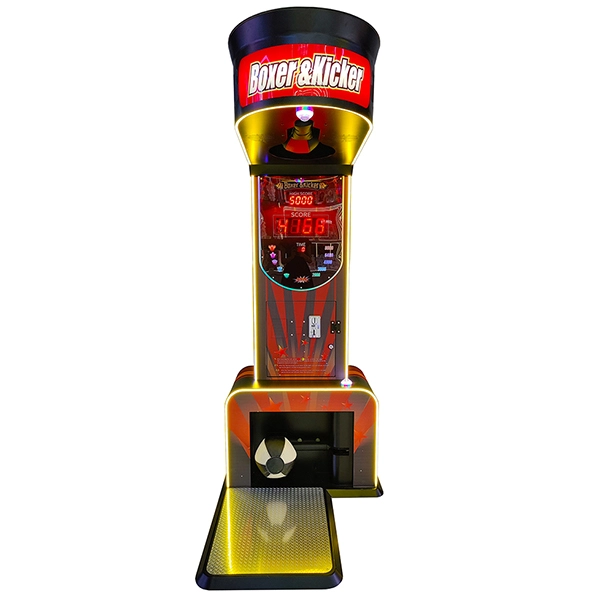
How Neofuns Punch & Kick 3 Boosts Visitor Engagement
FAQS
How long will it take for me to receive the goods?
Standard products are delivered within 2 days; customized products will be delivered on time after all order information is confirmed, or even delivered in advance. For large quantities, it usually takes 35-40 days. Small customized, delivery time of within 30 days.
Who are we?
As a 20 years R&D experience manufacturer,we specialized in boxing game machines, holding 50+ patents.
Whether to provide perfect after-sales service?
Yes, 24-hour online service, supporting multi-language online technology and after-sales support,1-year free warranty for core accessories, and lifetime maintenance.
Can you provide corresponding prize purchasing services?
Yes, we provide prize options,one-stop shopping.
Can I customize special specifications and packaging?
Yes, we support customization of appearance, program, organization, etc.

Neofuns Boxing Prize Arcade Punching Game Machine
Test your strength and aim for glory! Players unleash thrilling punches on our dynamic boxing pad. Hit hard, score big, and watch the excitement build! Reach the target score, and WIN A PRIZE INSTANTLY! Perfect for arcades, family entertainment centers, bars, and events—this high-energy attraction draws crowds, boosts revenue, and keeps customers coming back for that winning punch!

Neofuns Kids Boxing Punch Machine
The Kids Boxing Punch Machine is an interactive amusement device designed specifically for children, commonly found in amusement parks, shopping malls, or family entertainment centers. Its core function is to allow kids to test their strength, speed, and reaction abilities by punching a target.

Neofuns Boxing Champion Arcade Punching Game Machine
The colorful lights can make players immerse themselves in the punch of boxing, and every punch is a release of pressure; the digital scoreboard allows players to feel the sense of accomplishment brought by each punch, making people unable to stop and increasing your venue revenue; the customizable logo and stickers help you improve your brand awareness.
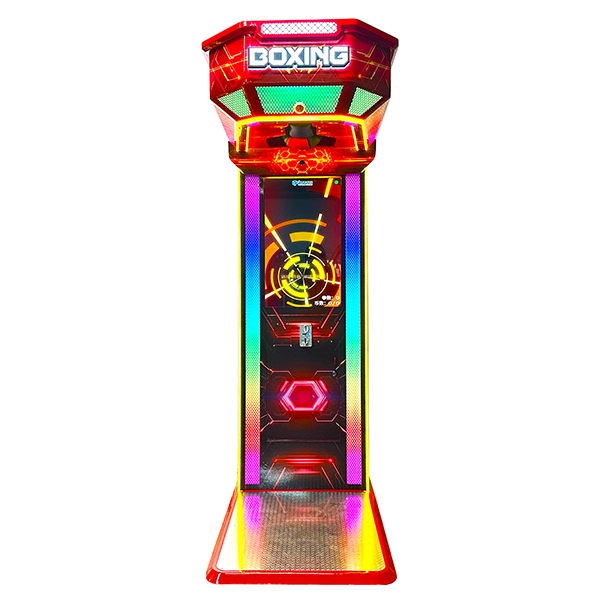
Neofuns Boxing Video Arcade Punching Game Machine
Experience the ultimate fusion of strength and technology with our cutting-edge boxing machine! At its heart lies a vibrant 32-inch HD display that reacts in real-time to every punch—tracking your speed, power, and accuracy with thrilling visuals.
Become the Champion: Shatter records? Our built-in auto-capture camera instantly films your victory moment and immortalizes you on the global leaderboard!
Compete & Conquer: Challenge friends worldwide. Your name in lights awaits!
Immersive Training: From precision drills to knockout games—crystal-clear graphics make every hit explosive.
 +86 137 1928 7841
  sales@neofuns.com
Copyright © 2025 Neofuns. All Rights Reserved.
Instagram
Facebook
Youtube