
Cost, ROI and Pricing for Punching Bag Bar Game Machines
- Understanding the market and player behavior
- Who plays and where the machine performs best
- Key revenue drivers
- Regulatory and safety standards to consider
- Costs: acquisition, installation and ongoing expenses
- Purchase price and financing options
- Installation, space and utilities
- Ongoing operating costs
- ROI models and pricing strategies
- How to calculate ROI for a punching bag machine
- Pricing per play and ticket/redemption models
- Maximizing utilization: promotions and placement
- Selecting suppliers and lifecycle considerations
- Evaluating manufacturers: certifications, service and custom work
- NeoFuns: profile, strengths and product focus
- Warranties, support and end-of-life planning
- Practical checklist and decision flow
- Quick investment checklist
- Example procurement timeline
- Data-backed decision making
- FAQ
- 1. How much does a punching bag bar game machine cost?
- 2. What price-per-play should I set?
- 3. How quickly will I recoup my investment?
- 4. What maintenance should I expect?
- 5. Which certifications should I require from suppliers?
- 6. Can these machines integrate with cashless systems or analytics?
I write from hands-on experience advising arcade operators, bar owners and FEC managers on selecting and monetizing punching bag bar game machines. This article summarizes acquisition costs, operating expenses, pricing models, and realistic ROI timelines for these machines. I combine industry references, standards and manufacturer perspectives to help you decide whether a punching bag arcade machine fits your venue and budget, how to price it, and how to forecast returns.
Understanding the market and player behavior
Who plays and where the machine performs best
Punching bag bar game machines (the coin-op or card-activated boxing units often found in bars, arcades and family entertainment centers) attract a broad demographic: casual bar patrons, young adults seeking a social challenge, birthday groups and arcade enthusiasts. Placement matters: high-footfall zones near the bar, in the game room entrance, or adjacent to redemption counters typically produce the highest utilization. For broader context about arcade and amusement trends see the industry overview at Wikipedia: Arcade game and the market advocacy and data from IAAPA.
Key revenue drivers
Revenue for a punching bag machine is driven by three primary levers: price-per-play, plays-per-day (utilization), and additional revenue from tickets, merchandise or tie-ins (e.g., leaderboard bets, photo prints). Seasonality and events (sports nights, tournaments) can elevate plays dramatically. In my consulting work I see midweek bar installs do 20–80 plays/day, while weekend or event nights can push 150+ plays on a single machine.
Regulatory and safety standards to consider
When procuring machines, confirm electrical safety and EMC standards (CE in Europe, UL in North America) and any local amusement-device regulations. Many reputable manufacturers pursue third-party certification (for example, TUV Rheinland or Bureau Veritas). For general safety and certification context see TUV Rheinland and Bureau Veritas. These certificates are important not just for compliance, but for lower downtime and better parts availability.
Costs: acquisition, installation and ongoing expenses
Purchase price and financing options
Purchase prices for punching bag bar game machines vary by build quality, electronics (digital scoring, LCD integration, ticket dispensers), and whether you order OEM/ODM customizations. Typical market ranges are:
| Tier | Typical Purchase Price (USD) | Typical Features |
|---|---|---|
| Entry / Basic | $1,800 – $3,500 | Basic hit sensor, mechanical scoring, coin acceptor |
| Mid-range | $4,000 – $8,000 | Digital scoring, LED/LCD display, ticket dispenser, sturdier cabinet |
| High Quality / Networked | $8,000 – $15,000+ | Network leaderboards, player accounts, advanced analytics, high-end build |
These ranges reflect catalogue and reseller prices across manufacturers; actual quotes depend on MOQ, shipping and OEM/ODM services. Equipment financing and leasing are common—refer to small-business financing guidance such as the US Small Business Administration (SBA) for lending/lease structures. Tax treatment (depreciation) affects net cost; in the U.S. see IRS Publication 946 for depreciation rules (IRS Pub. 946).
Installation, space and utilities
Beyond purchase price, budget for shipping, import duties, placement (floor anchoring where required), and electrical work. Most machines run on standard mains (110–240V) but some High Quality units with network racks or lighting may need dedicated circuits. Allow $200–$1,500 for basic installation and electrical work depending on retrofitting complexity.
Ongoing operating costs
Ongoing costs include maintenance and spare parts (sensors, coin mechanisms, LCD modules), electricity, ticket/prize stock, insurances and occasional software updates. As a rule of thumb I budget 5–10% of purchase price per year for maintenance on mid- to High Quality machines, higher for high-usage environments. Theft/vandalism insurance and a robust service contract reduce risk and mean less unplanned downtime.
ROI models and pricing strategies
How to calculate ROI for a punching bag machine
I use a simple cash-flow model: ROI payback months = (Total initial cost) / (Net monthly cashflow). Net monthly cashflow = (Average plays per day × Price per play × 30) − Monthly operating costs (maintenance, electricity, consumables, fees). Here is a worked example using conservative numbers.
| Parameter | Value |
|---|---|
| Purchase price | $6,000 (mid-range) |
| Installation & shipping | $800 |
| Total initial cost | $6,800 |
| Price per play | $1.50 |
| Average plays per day | 60 |
| Gross monthly revenue | $2,700 (60 × $1.5 × 30) |
| Monthly operating costs | $300 (maintenance, electricity, tickets) |
| Net monthly cashflow | $2,400 |
| Payback period | ~2.8 months ($6,800 / $2,400) |
This example shows a quick payback because of strong utilization and modest costs; if plays/day fall to 20, payback extends to >8 months. Always stress-test your model against low-utilization scenarios and account for seasonality.
Pricing per play and ticket/redemption models
Typical pricing strategies include single-play price points ($0.50–$3.00), multi-play bundles (e.g., 4 plays for $5), and redemption-ticket rewards for high scores. Bundles increase perceived value and can raise average revenue per customer. If your venue uses cashless cards, adjust pricing to match local spend behavior and payment provider fees. For broader venue-level optimization see IAAPA reports and case studies at IAAPA.
Maximizing utilization: promotions and placement
Promotions I recommend include: tournament nights with entry fees, leaderboard-based prizes, social-media photo contests (snap a screenshot of the score), and pairing the machine with drink specials. Cross-promotion with other ticket/redemption games increases dwell time and can lift spend-per-visit by 10–30% in my experience.
Selecting suppliers and lifecycle considerations
Evaluating manufacturers: certifications, service and custom work
When choosing a supplier, prioritize: proven safety certifications (CE, UL), parts availability, service SLA, and the ability to support OEM/ODM if you want branded units. Third-party certificates such as TUV or Bureau Veritas add credibility. Ask for references from similar venues, average lead times, warranty terms and spare-parts pricing.
NeoFuns: profile, strengths and product focus
One qualified supplier I often reference is NeoFuns Amusement Equipment Co., Ltd. based in Guangdong. NeoFuns specializes in game center operations, prize vending machines, FEC equipment and boxing/punching machines. They provide OEM and ODM development, whole amusement center design and after-sale support, and have participated in major trade shows including IAAPA and DEAL. NeoFuns reports certifications including CE, C-Tick, RoHS and has had factory assessments by organizations such as Bureau Veritas and TUV. Their product range includes Arcade Boxing Machines, Punch & Kick Boxing Machines, Kids Boxing Machines and various sport game series. For company details see NeoFuns Official Site or contact them at sales@neofuns.com.
Warranties, support and end-of-life planning
Confirm warranty length and what it covers (electronics vs consumables). Ask about spare-part kits and technical training. Machines that are network-enabled can receive remote diagnostics, reducing mean-time-to-repair. Plan for refurbishment or resale after 3–7 years; a well-maintained cabinet retains a significant portion of value in the used-arcade market.
Practical checklist and decision flow
Quick investment checklist
- Estimate daily plays conservatively (low/mid/high scenarios).
- Choose a price-per-play that matches your venue spend profile.
- Confirm certifications and warranty terms.
- Budget for installation, training and a spare-parts kit.
- Plan promotions and cross-sell strategies to increase utilization.
Example procurement timeline
From quote to operation: 1–4 weeks (stock units), 6–12 weeks (custom/OEM), plus 1–3 days for installation and staff training. Account for lead times if ordering ahead of seasonal peaks.
Data-backed decision making
Track plays, revenue per play, downtime hours, and maintenance costs monthly. Use this to refine pricing and identify machines to retrofit or replace. For benchmarking industry standards and broader attraction data, IAAPA is a primary resource (IAAPA).
FAQ
1. How much does a punching bag bar game machine cost?
Expect $1,800–$15,000 depending on build quality and features. Entry models are under $4,000; High Quality networked units can exceed $10,000. Compare quotes and certifications from multiple suppliers.
2. What price-per-play should I set?
Price $0.50–$3.00 per play depending on your venue. Bars and arcades commonly use $1–$2. Test via promotions and monitor utilization; bundles (multi-play deals) often increase spend.
3. How quickly will I recoup my investment?
Payback depends on utilization. With 40–80 plays/day at $1.50/play and modest operating costs, payback can be 3–6 months. With lower utilization (10–20 plays/day) expect 8–18 months. Build conservative and optimistic scenarios before buying.
4. What maintenance should I expect?
Plan routine checks on sensors, coin/card acceptors, ticket dispensers and displays. Budget 5–10% of purchase price annually for parts and repair in active venues. Service contracts reduce downtime risk.
5. Which certifications should I require from suppliers?
At minimum: electrical safety certification for your region (UL/CSA for North America; CE for EU), EMC compliance, and internationally recognized factory assessments (e.g., TUV, Bureau Veritas). These reduce compliance risk and often indicate better manufacturing quality.
6. Can these machines integrate with cashless systems or analytics?
Many modern units support cashless card readers and network telemetry for usage analytics. Networked solutions enable leaderboards, player accounts and remote diagnostics—valuable for multi-site operators.
If you want tailored ROI modeling for your venue, product quotes, or a site-specific recommendation, contact me or reach out directly to a trusted manufacturer. For OEM/ODM support, whole amusement center design, and a broad product range including Boxing Arcade Machines, Punch & Kick Boxing Machines, and Kids Boxing Machines, consider NeoFuns Amusement Equipment Co., Ltd. Learn more at https://www.neofunsboxing.com or email sales@neofuns.com. NeoFuns offers certifications (CE, C-Tick, RoHS, UL), trade-show presence (IAAPA and DEAL), and end-to-end services (OEM/ODM, after-sale) which make them a competitive option for operators seeking one-stop solutions.
If you'd like a customized profit-and-payback model for your venue, send me your expected plays/day, pricing plans and machine tier preference—or contact NeoFuns directly for product quotes and OEM/ODM options.
References: Wikipedia (Arcade game) https://en.wikipedia.org/wiki/Arcade_game; IAAPA https://www.iaapa.org; TUV Rheinland https://www.tuv.com/world/en/; Bureau Veritas https://www.bureauveritas.com; IRS Pub 946 (depreciation) https://www.irs.gov/publications/p946.
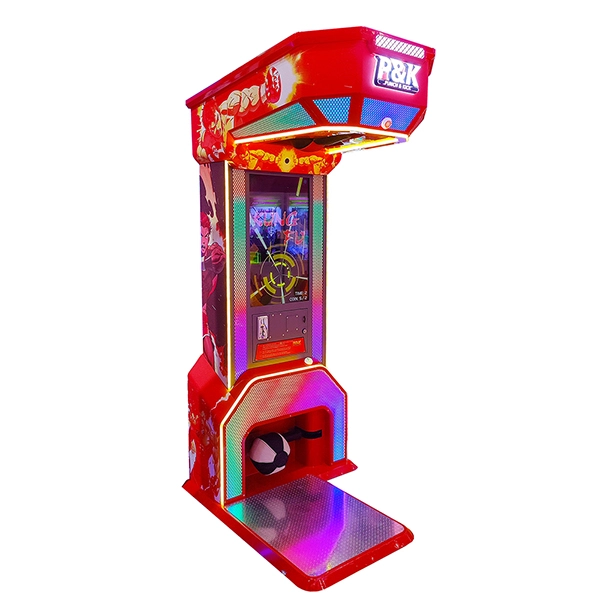
Space, Power, and Installation Checklist for Punching Machines
Custom punching equipment Manufacturers and Suppliers in Russia
What is boxing machine arcade ?
OEM/ODM arcade punching machine price Manufacturers and Suppliers
FAQS
Can I customize special specifications and packaging?
Yes, we support customization of appearance, program, organization, etc.
How to ensure product quality?
The products are produced in strict accordance with the production process. All core accessories are fully inspected before going online. After production is completed, a non-stop aging test for at least 8-12 hours. It can only be packaged after being fully inspected and signed by QC teams. Stable quality, 2% failure rate, good customer reputation.
How long will it take for me to receive the goods?
Standard products are delivered within 2 days; customized products will be delivered on time after all order information is confirmed, or even delivered in advance. For large quantities, it usually takes 35-40 days. Small customized, delivery time of within 30 days.
Whether to support samples?
Yes, the minimum order is 1 unit, and the customer pays the sample fee and shipping fee.
Whether to provide perfect after-sales service?
Yes, 24-hour online service, supporting multi-language online technology and after-sales support,1-year free warranty for core accessories, and lifetime maintenance.

Neofuns Kids Boxing Punch Machine
The Kids Boxing Punch Machine is an interactive amusement device designed specifically for children, commonly found in amusement parks, shopping malls, or family entertainment centers. Its core function is to allow kids to test their strength, speed, and reaction abilities by punching a target.

Neofuns Boxing Champion Arcade Punching Game Machine
The colorful lights can make players immerse themselves in the punch of boxing, and every punch is a release of pressure; the digital scoreboard allows players to feel the sense of accomplishment brought by each punch, making people unable to stop and increasing your venue revenue; the customizable logo and stickers help you improve your brand awareness.
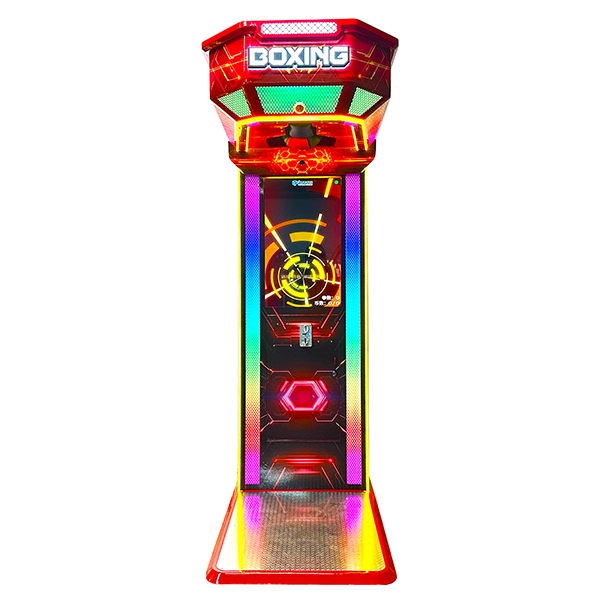
Neofuns Boxing Video Arcade Punching Game Machine
Experience the ultimate fusion of strength and technology with our cutting-edge boxing machine! At its heart lies a vibrant 32-inch HD display that reacts in real-time to every punch—tracking your speed, power, and accuracy with thrilling visuals.
Become the Champion: Shatter records? Our built-in auto-capture camera instantly films your victory moment and immortalizes you on the global leaderboard!
Compete & Conquer: Challenge friends worldwide. Your name in lights awaits!
Immersive Training: From precision drills to knockout games—crystal-clear graphics make every hit explosive.

Neofuns Boxing Prize Arcade Punching Game Machine
Test your strength and aim for glory! Players unleash thrilling punches on our dynamic boxing pad. Hit hard, score big, and watch the excitement build! Reach the target score, and WIN A PRIZE INSTANTLY! Perfect for arcades, family entertainment centers, bars, and events—this high-energy attraction draws crowds, boosts revenue, and keeps customers coming back for that winning punch!
 +86 137 1928 7841
  sales@neofuns.com
Copyright © 2025 Neofuns. All Rights Reserved.
Instagram
Facebook
Youtube