
How Boxing Arcade Machines Work: Sensors, Scores, and Buyer Checks
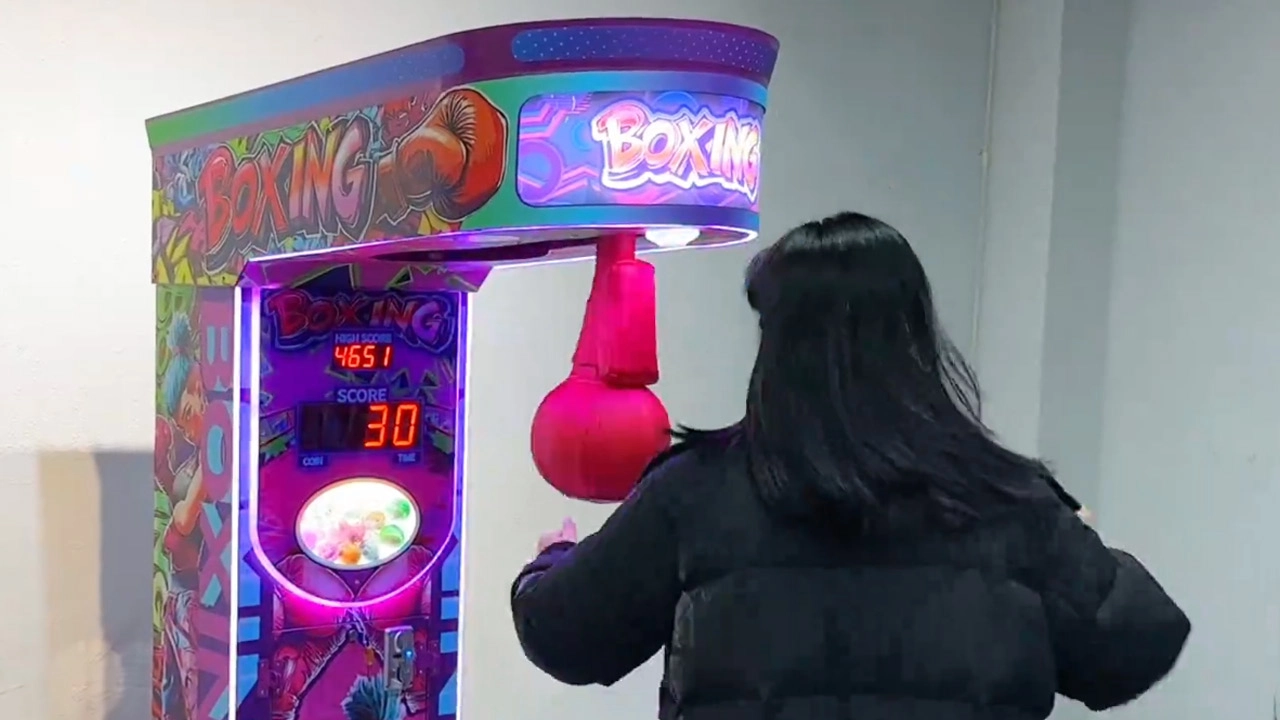
A boxing arcade machine turns a player's hit into a game result. Depending on the model, a target is struck or moved, a system detects an event related to that action, and the controller applies programmed game rules before the display, lights, or sound give feedback. The target then returns, locks, or re-arms for the next play. Its exact sensor, score logic, and reset hardware are model-specific.
| Quick fact | What a venue buyer should know |
|---|---|
| Main purpose | The screen normally presents an entertainment-game result. |
| What can vary | Target design, detection method, scoring rules, payment start, and reset behavior can vary by model. |
| What a score proves | A number alone does not identify a physical unit, test method, or cross-machine benchmark. |
| What affects operation | The quoted model's settings, target condition, diagnostic process, and reset behavior are the useful details to verify. |
| Best next question | Ask the supplier to describe and document the exact model rather than assuming a universal construction. |
The basic punch-to-score cycle
A useful way to understand the machine is as a short input-and-feedback cycle. It describes the job each stage performs, not a universal parts list. A public patent example of an arcade boxing game combines a striking target, a detection event, game control, feedback, a paid start, and a retraction function (Source 1 in References & Sources). Other designs may arrange those functions differently.
| Step | What happens in the game cycle | Why a buyer should care |
|---|---|---|
| 1. Start | A play is enabled by the model's chosen start method, which may be payment- or operator-controlled. | The start flow needs to fit the venue's payment and supervision setup. |
| 2. Ready | The target becomes available for the round. | A clear ready state makes the game easier for players and staff to understand. |
| 3. Hit or movement | The player strikes the target, or the target moves in response to the attempt. | This is the physical event that begins the scoring sequence. |
| 4. Detection | The machine registers a defined event related to the target, impact, position, or movement. | The exact event and the hardware used to detect it should be confirmed for the quoted model. |
| 5. Game logic | The controller applies the model's programmed rules to the received signal. | This is why the displayed number is a game output rather than a self-explanatory physical unit. |
| 6. Feedback | The display and, where fitted, lighting or sound communicate the game result. | Fast, legible feedback supports the player experience and lets staff recognize an abnormal state. |
| 7. Reset | The target and game state return to a ready condition. | Reset behavior affects the next play and is a practical point for a demonstration. |
What parts can change the way a model works?
The same seven jobs can be implemented with different mechanical and electronic arrangements. For example, one public patent record illustrates a movable bag with a rocker, latch, spring, motor, buffer or cushion, and an optical sensor (Source 2 in References & Sources). That is an invention-specific example, not a specification for every boxing arcade machine or for a current NeoFuns model. The useful buyer question is therefore not “Which universal sensor does this category use?” but “Which parts and diagnostic steps apply to this quoted model?”
| Functional area | What may differ by model | Evidence to request |
|---|---|---|
| Striking target | The shape, travel, mounting, and return path of the target can differ. | A product video or live demonstration showing the target at rest, in play, and after reset. |
| Detection arrangement | The detected event and the component that registers it can differ. | A model-specific description of the sensing arrangement and any available test or diagnostic method. |
| Controller and program | The rules that turn a detected event into a screen result can differ. | A description of relevant settings, display behavior, and the process for restoring intended settings. |
| Start and payment | The way a round begins can differ with venue configuration. | The supported start or payment configuration for the quoted model. |
| Feedback system | Screen, lights, sound, and countdown behavior may be configured differently. | A demonstration of normal play and the signals staff should recognize. |
| Reset system | A model may use a different sequence or hardware to return its target to ready. | A live reset demonstration plus service-access and replacement-part information. |
What does the screen score actually mean?
For most purchase conversations, treat the displayed result as a game score until the supplier documents something more specific for the exact model. A score can be useful for a short competitive game because it gives players immediate feedback. It does not, by itself, tell a buyer which physical quantity was measured, whether a physical unit is used, how any conversion was made, or whether another machine's number is comparable.
This distinction matters when people ask whether a machine measures “power” or PSI. Those words require a stated quantity, unit, method, and scope before they can support a technical claim. The International Vocabulary of Metrology defines measurement accuracy in relation to a stated measurand and a true quantity value (Source 3 in References & Sources). That definition does not evaluate arcade machines. It does show why a numerical display alone is not enough evidence for an accuracy, PSI, force, or cross-machine-comparison statement.
| Question | Sound buyer interpretation | What to ask for |
|---|---|---|
| “Does it measure power?” | The word can mean different things; do not infer a single method from the score. | The model's documented detected event, score description, and any stated unit. |
| “Does it measure PSI?” | Do not present the score as PSI unless the exact model documentation defines it that way. | The declared quantity, unit, method, and supporting test evidence. |
| “Is a higher score stronger?” | Within a game, a higher result may be part of the programmed competition; it is not automatically a universal strength ranking. | The model's score rules and the intended player-facing explanation. |
| “Can I compare two machines?” | A number from one model does not automatically establish equivalence with another. | Documentation showing that the quantities, settings, and comparison conditions match. |
Where do high-score and hitting-technique questions belong?
Questions such as “Is there a trick?” or “How should I hit it?” are about player performance, not the machine's operating principle. This article does not promise a universal hitting method, average score, or score threshold because outcomes can depend on the model, its programmed settings, the target condition, and venue rules. Players should follow the venue's posted instructions and staff guidance. Operators who want player advice should keep it separate from technical claims about what the machine detects or what the score means.
Why can two scores look different?
An entertainment score can look different for several reasons without proving that the machine is or is not making a documented physical measurement. The right response is to identify the exact model, observe a normal play cycle, and compare the documented conditions rather than guessing from one screen result.
| Factor to check | Why it matters to an operator | Useful action |
|---|---|---|
| Programmed settings | The model's rules may affect the player-facing result. | Record the settings used for normal venue operation and ask how they are restored. |
| Target condition and reset | The ready position and return sequence are part of the game cycle. | Watch several complete play-and-reset cycles during a demonstration. |
| Detection and diagnostics | The model may provide a defined test or fault-check process. | Request the relevant manual section and ask staff to demonstrate the procedure. |
| Comparison conditions | A number from another cabinet may be produced under different rules or conditions. | Avoid using a generic score as a cross-machine benchmark. |
| Player interaction | The game receives an event created during each attempt. | Explain results to players as game scores, not as universal physical rankings. |
What should a buyer verify before requesting a quote?
The most reliable comparison is based on evidence for the exact model that will be quoted, demonstrated, supplied, and supported. Use the checklist below in a supplier conversation. It turns a broad “How does it work?” question into specific items a venue can evaluate.
| Buyer question | Ask the supplier for | How it informs a decision |
|---|---|---|
| What starts a game and what does the player see? | A demonstration of the start flow, ready state, round feedback, and reset. | Confirms that the intended venue workflow is easy for players and staff to understand. |
| What event does this model detect? | A model-specific description of the target and detection arrangement. | Prevents an assumption that all cabinets use the same sensor or scoring method. |
| What does the displayed score represent? | Written player-facing wording, any declared quantity or unit, and the stated scoring logic. | Helps the venue avoid unsupported PSI, force, or accuracy claims. |
| Which settings and diagnostics are available? | The relevant manual pages, menu access rules, and a normal test or fault-check demonstration. | Gives the operator a basis for routine checks and staff handover. |
| How does reset work in normal play? | A full demonstration and the applicable service-access or replacement-part information. | Makes reset behavior a visible selection criterion rather than an assumption. |
| What configuration fits the location? | Available start/payment options and the stated installation requirements for the quoted model. | Connects the machine to the site's operating model. |
| What support is included in the quote? | The applicable documentation, parts process, response path, and commercial terms. | Lets the buyer compare the total operating arrangement, not just the cabinet price. |
How to use this explanation when comparing machines
A boxing arcade machine can be understood as a game cycle: a round starts, a player action is detected, the controller applies the model's rules, feedback is shown, and the unit returns to ready. That framework is useful because it keeps the comparison grounded in the exact model. Do not assume a generic sensor, score scale, PSI value, or accuracy claim. Instead, request a demonstration, written scoring description, settings and diagnostic information, reset details, and support documents before you compare quotes.
References & Sources
- US5733193A — Boxing arcade game. Used as an invention-specific example of a target, detection/scoring event, game feedback, paid start, and retraction arrangement; it is not a specification for every machine.
- US8986171B2 — Boxing game machine. Used as an invention-specific example of an alternative mechanical and optical-sensor arrangement; it is not a specification for every machine.
- VIM3 2.13 — measurement accuracy. Used only to clarify that measurement accuracy relates to a stated measurand and a true quantity value; it does not evaluate arcade machines.
Compare the Right Boxing Arcade Machine for Your Venue
Planning a purchase? Request a model-specific quote and share your venue type, intended players, payment setup, and the documents you need for sensing, scoring, reset behavior, diagnostics, and service. NeoFuns can then help you compare the applicable category and the quoted model.






 +86 139 2243 9918
 sales@neofuns.com
Instagram
Facebook
Youtube